SLO Versus SLA Definitions and Operational Differences
Understanding the hierarchy prevents reliability promises from turning into legal liabilities.
SLIs, SLOs, and SLAs get thrown around like synonyms in planning meetings, and that habit is costing teams more than a vocabulary slip. All three terms point at the same surface metrics, things like uptime, latency, and error rate, so it's easy to assume they're three ways of saying the same thing. They're not. Each one answers a completely different question, and mixing them up isn't a language problem so much as a design flaw baked into how a team thinks about reliability. EdgeDelta's research lays out the cost bluntly: once organizations blur these three layers together, they lose the ability to reason clearly about performance, risk, and ownership, and that fog eventually hardens into policies, contracts, and incentives that have nothing to do with how the system actually behaves. Most outages don't start with a server catching fire. They start months earlier, with someone writing a target into a contract that the engineering team never confirmed it could hit. Fixing that starts with getting the three terms straight.
What each layer of the hierarchy does
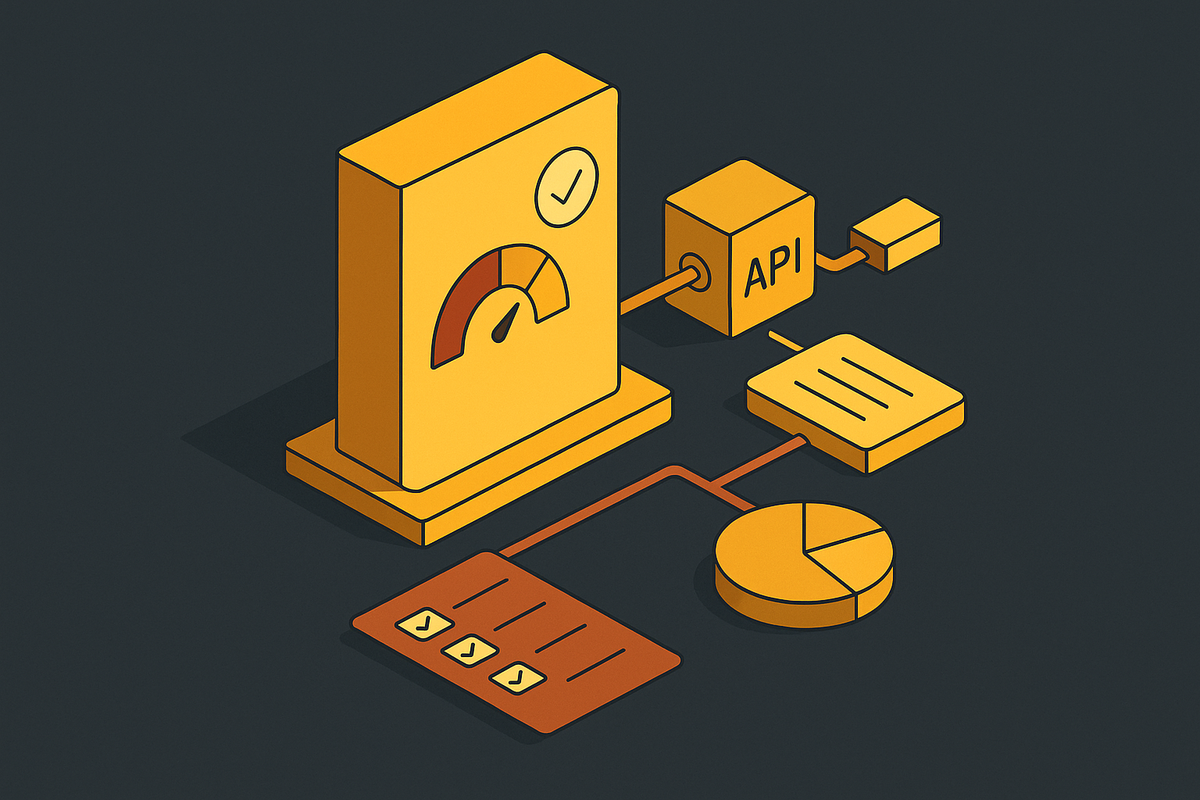
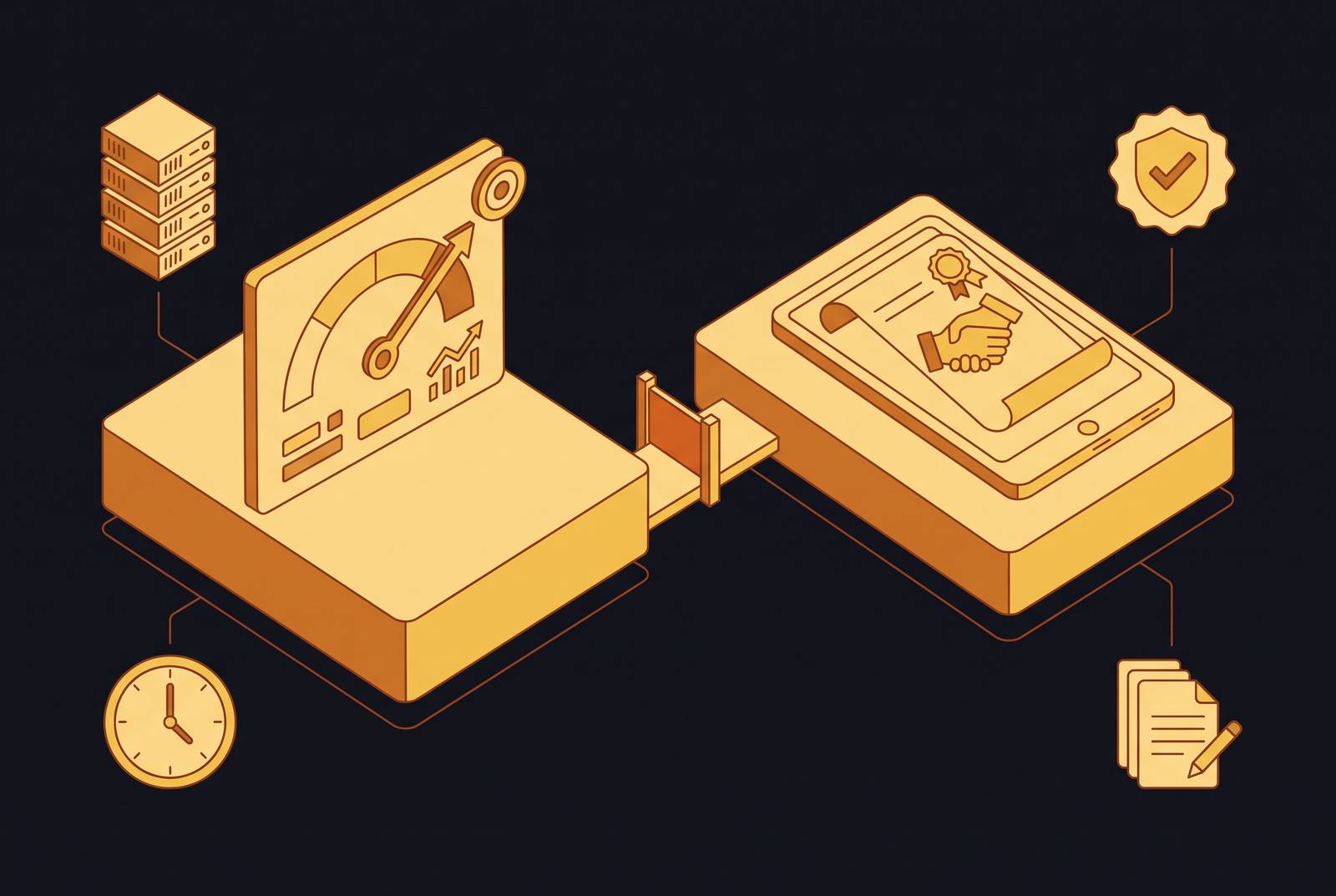
Picture the hierarchy as three people at a meeting, each asked a different question. The first is asked what the system is actually doing right now. The second is asked how much bad behavior the team is willing to live with. The third is asked what's been promised, in writing, to a paying customer. Those three questions, in that order, are the entire structure: SLIs, then SLOs, then SLAs.
An SLI, or service level indicator, is the measurement. The Google SRE Book defines it, as quoted by SigNoz in June 2026, as "a carefully defined quantitative measure of some aspect of the level of service that is provided". In practice that means latency, availability, error rate, and throughput, picked because they reflect what a user actually feels when they use the product rather than because they happen to be the easiest numbers to pull out of a log file. An SLI's job stops at observation. It watches. It does not judge, and it does not set a goal. When teams optimize SLIs directly, they optimize numbers rather than user experience. A success-ratio SLI alone misses every degradation that returns a successful status code at the wrong latency or freshness, and measurement layer choices have downstream consequences for every layer above. Whatever gets measured at this layer becomes the raw material for every decision made above it, so a sloppy SLI choice doesn't stay contained. It travels upward.
An SLO, or service level objective, is the internal target built on top of that measurement. SigNoz's June 2026 breakdown gives it a clean structural template: an SLI metric, compared against a target, over a defined time window. Missing an SLO keeps the consequences in-house: a page goes out, a deploy freezes, a sprint gets reprioritized around reliability work. Nobody outside the building notices, and nobody gets a refund.
An SLA, or service level agreement, is the external commitment, and it's the only one of the three with teeth. EdgeDelta describes it as a contractual agreement spelling out what service the customer should expect, how that service gets measured, and what happens when it isn't delivered, whether that's a service credit, a financial penalty, or an escalation clause. SLAs get written conservatively because real money and legal standing sit behind the number. Coralogix (May 2026) states the number becomes the floor engineering cannot drop below without writing checks, so SLAs run conservative, set well above what the service actually delivers on a good week.
Why information must flow upward through the hierarchy
The correct order is to instrument SLIs first to understand actual system behavior, set SLOs once you know what is reliably achievable, and publish SLAs only after demonstrating you can consistently hit the internal target. A different order undermines any amount of clever tooling.
The correct build order looks like this. Instrument the SLIs first, and spend real time understanding what the system is doing under normal and abnormal load. Set the SLOs next, once the data shows what's actually achievable rather than what sounds impressive in a planning doc. Publish the SLA last, only after the team has shown it can hit the internal target consistently, not just on a good week.
A backward sequence turns the whole thing into writing checks against an account nobody has counted. A 99.9% SLO over a 30-day window leaves only tens of minutes of allowable downtime, and teams must track burn rate against that budget, not just the headline percentage. EdgeDelta frames the structural rule cleanly: SLIs, SLOs, and SLAs are not peers, they form a directional hierarchy where information flows upward and constraints are never supposed to flow back down. Ownership mirrors that same direction. SLIs and SLOs are owned by engineering and SRE, while SLAs are co-owned with the customer, since they are contracts requiring buy-in from both parties, and the provider controls the layers below but not the signed agreement above. The provider controls everything below the signed agreement. It does not control the agreement itself once ink hits paper.
Organizations often face commercial pressure to publish SLAs before internal reliability data is mature. That pressure is understandable, and it's also exactly the mistake that causes the damage. A premature SLA doesn't speed up reliability maturity. It creates a legal liability that forces the engineering org into reactive firefighting instead of the proactive improvement work that would have made the promise safe to make in the first place.
The buffer between SLO and SLA determines operational stability
Everything above is structural until it meets one very practical question: how much daylight should sit between the internal target and the external promise? The three layers answer three different questions in a fixed order: SLIs answer "what is the system actually doing?", SLOs answer "how much unreliability are we willing to tolerate?", and SLAs answer "what have we promised a customer in writing?". Setting the internal SLO tighter than the external SLA builds a safety margin, a stretch of runway where engineering can debug a problem, roll back a bad deploy, or escalate an incident before any customer credit gets triggered.
SigNoz's June 2026 incident arithmetic shows the buffer doing its job in real time. If one incident burns through a chunk of allowed downtime, a team can check how much of the SLO budget got spent against how much of the SLA budget remains, and that gap gives them breathing room to investigate the root cause before any customer commitment is at risk. The AWS EC2 SLA is a real-world example of this design choice. Its credits are tiered rather than a straight line, with clear thresholds that make the floor something engineering can actually build around and plan for.
The buffer doesn't just protect a number on a dashboard. It shapes architecture decisions long before an incident ever happens. Young Upstarts, writing in August 2025, points out that a high-availability SLA commitment structurally requires a multi-AZ deployment. A single-instance setup simply cannot support anything beyond a lower-tier SLA. The external promise dictates the infrastructure underneath it, and the internal SLO guards that infrastructure from slipping.
Sizing that gap correctly takes real judgment, and getting it wrong hurts in opposite directions. Set the SLO too close to the SLA and customer credits appear on next month's invoice before engineering ever sees a warning sign. An SLO set too close to the SLA puts customer credits on the next invoice before engineering sees the warning, and an SLO set too far below burns out the on-call rotation chasing pages nobody outside the team would have noticed.
Error budgets transform SLOs from dashboard numbers into decision gates
An SLO by itself is just a number on a chart until an error budget turns it into something a team actually has to act on. The error budget is the amount of allowable unreliability derived from that target: the gap between perfect performance and the SLO, expressed as time or request volume the team is allowed to spend on deploys, experiments, and the occasional incident before breaking the promise.
The math is unforgiving. SigNoz, citing Google's SRE practices from June 2026, points out that a 99.9% SLO across a 30-day window leaves a team with only tens of minutes of downtime to work with. Teams that only watch the headline percentage instead of tracking burn rate against that budget find out they've run out of runway at the worst possible moment. An error budget policy is what turns that remaining number into an actual decision rather than a trivia fact. EdgeDelta describes the pattern: when the budget is healthy, ship normally, and once it drops below an agreed threshold, non-critical feature work freezes until the budget recovers. That policy takes the politics out of the room. When a product manager asks why a feature can't ship this sprint, the answer isn't a judgment call from an engineer having a bad day. The error budget is nearly gone, and the policy that both sides already agreed to prohibits non-critical deploys below that line.
Two traps break this system if a team isn't careful. Networks fail. Hardware fails. Clients misbehave in ways no service can fully control, and a zero-budget target doesn't describe reality so much as it deletes the decision gate the budget was supposed to create. Every objective implies its own alerts, review cadence, and a budget somebody has to police, and too many SLOs per service means none of them changes behavior. A manageable set, one for availability, one for latency, maybe one tied to a business metric, is a set a team can actually act on.
How the hierarchy breaks down in practice
Most failures in this system are organizational, and they tend to repeat across companies in recognizable shapes. The first shape is ownership confusion. SLAs need buy-in from both the provider and the customer because they're contracts, while SLOs belong solely to the provider. When an engineering team tries to negotiate SLA terms without sales and legal in the room, or when sales commits to an SLA number without ever checking with SRE, both layers are being used in ways they were never built for.
The second shape occurs at the measurement layer, and it's the most common one. A team measures success rate inside the application itself and calls it a day, missing every failure happening in the load balancer, the service mesh, or the network in between. A request can come back marked "successful" while it arrived late or carrying stale data, and a shallow SLI will record nothing wrong at all. EdgeDelta's research names the deeper mechanism: once indicators become goals instead of observations, teams start optimizing the metric instead of the outcome it was meant to represent, and that corruption at the base of the hierarchy poisons every target and every commitment stacked on top of it.
A close cousin of that problem is the percentile trap. Young Upstarts, in August 2025, points out that p95 latency can look perfectly healthy while p99 latency is making a meaningful slice of users miserable. Picking the wrong percentile as the SLI means the SLO built on top of it protects the wrong slice of customer experience.
The third shape is neglect rather than error. In plenty of B2B SaaS settings, the SLA gets written once, dropped into a slide deck during the sales process, and then never looked at again. Without a visible dashboard and ongoing follow-through from leadership, front-line teams start treating the SLA as a suggestion rather than a floor they're not allowed to go under. And the surface area for all of this keeps growing. Young Upstarts notes that conflating the three layers in an environment this complex tends to produce one of two outcomes: over-promising to customers, or over-engineering a stack that didn't need to be that expensive.
Setting SLOs and SLAs that hold up in production
The fix for all of this is the same sequence described earlier, applied with discipline rather than treated as a one-time setup task. Instrument SLIs against the journeys users actually take through the product, not against whatever metric happens to sit closest to a dashboard already built for something else. Server-side latency, as SigNoz has noted, is far easier to measure than client-side latency, but client-side latency is the number a user actually feels sitting in front of their screen, and a team that only tracks the easy number is tracking the wrong experience. Set SLOs only after that measurement work shows what's genuinely achievable, rather than picking a round number because it sounds reassuring in a planning meeting. Publish SLAs last, and build them conservative enough to absorb ordinary variability and the occasional rough week without triggering a credit every time traffic spikes.
Write an error budget policy down where everyone can see it, with a clear rule for what happens when the budget runs low, so that a stalled feature isn't a debate but a documented consequence of a number everyone already agreed to respect. Assign ownership honestly: SLIs and SLOs stay with engineering and SRE, and SLAs get built jointly with sales, legal, and the customer, because a contract only works when everyone who has to live with it helped write it. Followed in that order, the hierarchy stops working as a vocabulary lesson and starts keeping a promise to a customer resting on a number the engineering team actually knows it can hit.