How REST APIs Communicate Across Microservices
REST enables loose coupling between microservices through stateless contracts.
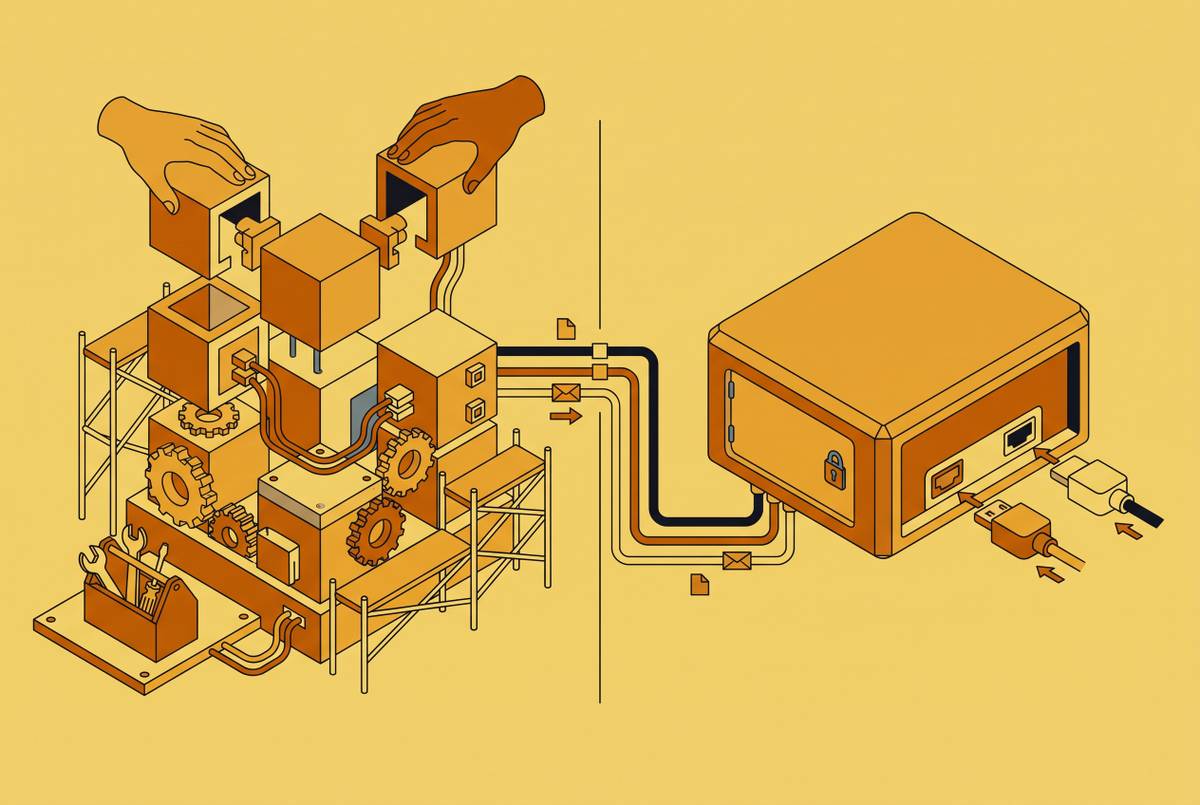
REST is a style for designing APIs. Microservices is a pattern for structuring an application. A monolith can expose a perfectly RESTful API, and a microservices system can skip REST entirely and talk over gRPC instead. Neither one requires the other.
So where does the confusion come from? Most production microservices architectures use REST as the default communication mechanism, a co-occurrence that drives teams to stop seeing them as separate decisions. That distinction matters because when REST starts creaking under load, the fix is usually "fix your REST contract," which is a much smaller, much less terrifying problem than rearchitecting your services.
REST constraints that make loose coupling possible
REST is a set of promises a service makes to whoever calls it, and those promises are what let two teams build independently without coordinating on every deployment.
Statelessness is the big one. Every request has to carry everything needed to process it. The server doesn't remember you from the last call, doesn't keep a session hanging around, doesn't owe you any context. This means any instance of a service can handle any request, with no sticky sessions and no ambiguity about which server holds a customer's cart.
Then there's the uniform interface: resources get identified by URLs, actions get described by HTTP verbs (GET, POST, PUT, PATCH, DELETE), and responses describe themselves. Client and server can then evolve on separate timelines as long as the interface contract holds, which is what loose coupling actually means in practice. Cacheability rounds it out: HTTP's built-in cache semantics let CDNs and gateways absorb repeat requests without bothering the origin service, which matters enormously for anything read-heavy.
How a request travels between two services
Each service exposes a REST endpoint identified by a URL, and the calling service constructs an HTTP request with the appropriate method, headers, and body.
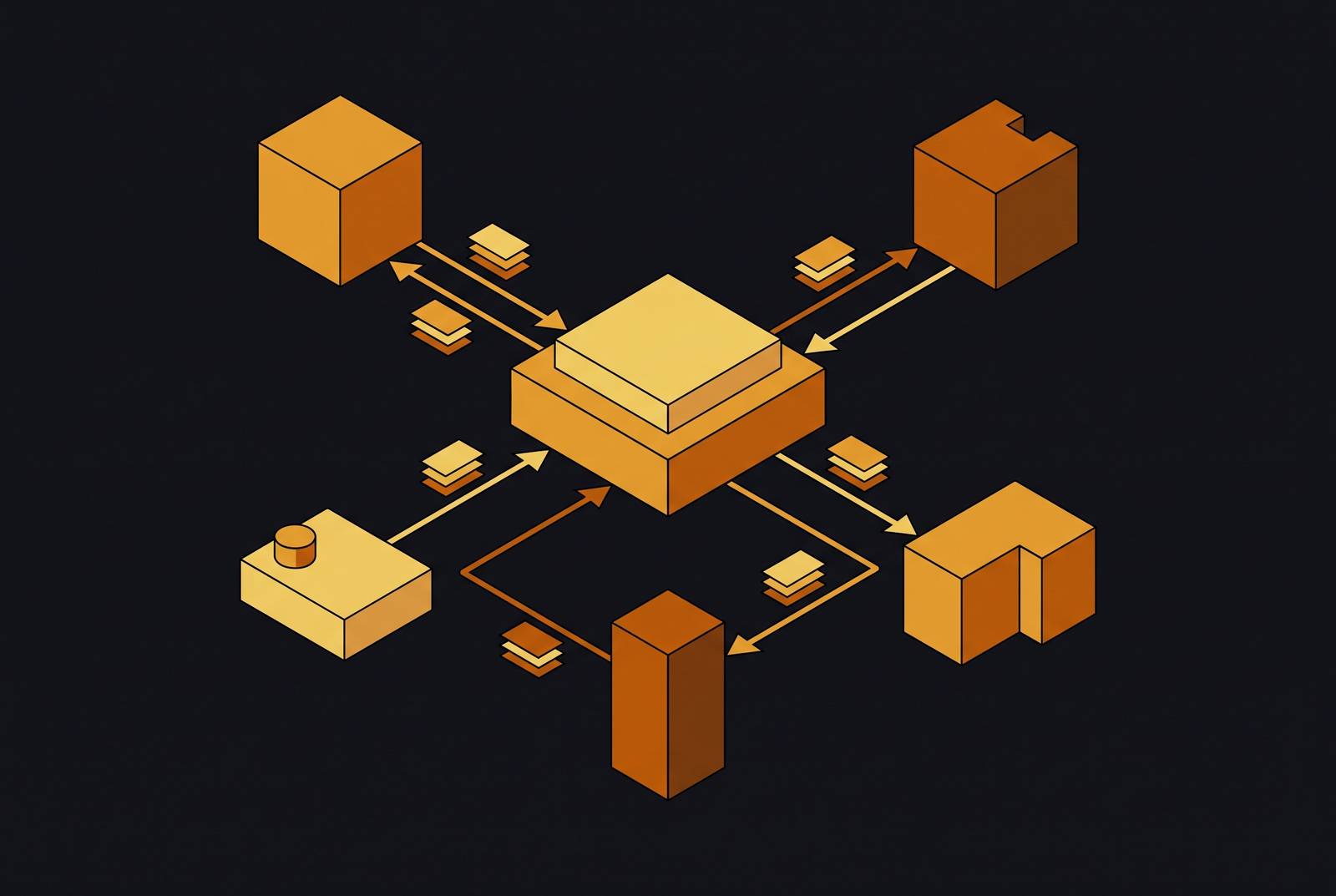
In practice, that request usually doesn't go straight to its target. An API gateway sits in front of the whole system, handling authentication, rate limits, routing, and logging before the request ever reaches the service that's actually supposed to answer it. Public consumers, mobile apps, and third-party integrations hit the gateway and never communicate with individual services directly.
Resource URL conventions keep inter-service calls predictable. Use nouns, not verbs: /orders/123, never /getOrderById?id=123. Keep plural nouns consistent across the board. Nest carefully: one level of nesting, like /users/42/orders, tells you who owns what without creating ambiguous hierarchies.
The HTTP verbs carry semantic weight beyond labeling. DELETE and PUT are idempotent; POST is not, and that distinction determines whether a service can safely retry a failed call.
Where synchronous REST breaks under load
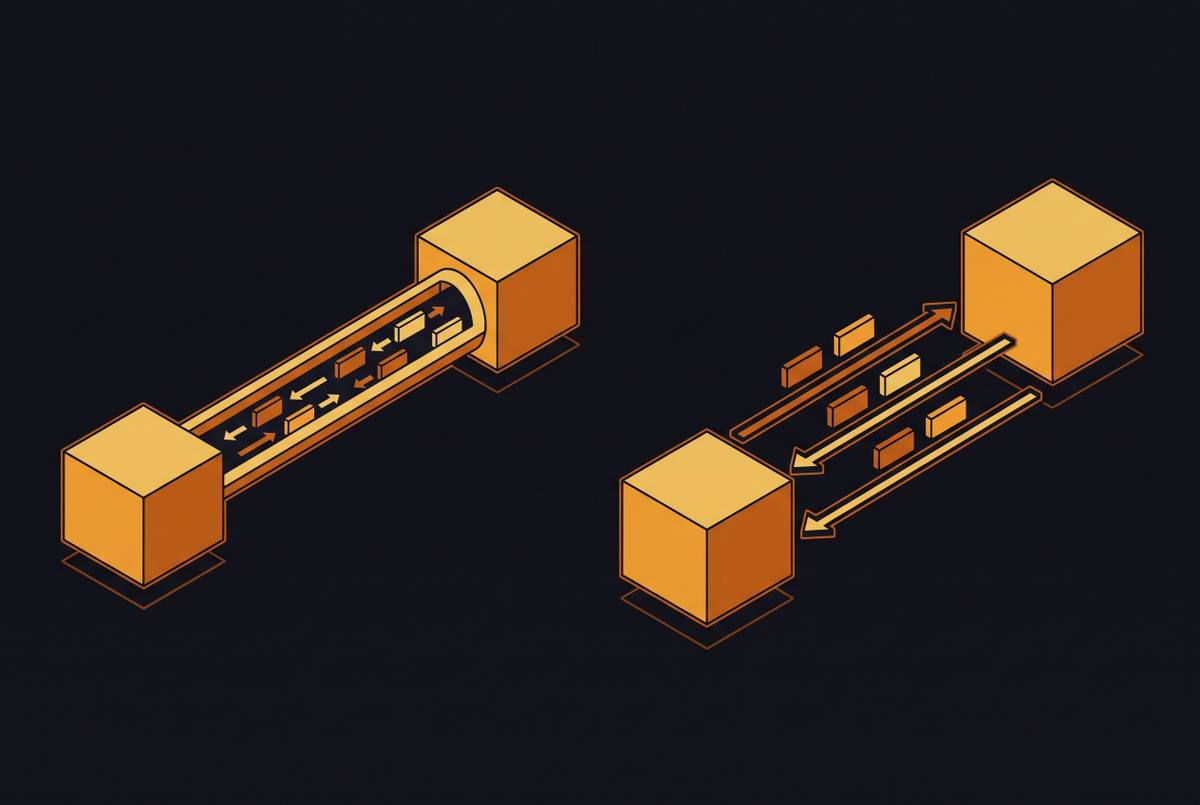
When service A calls service B synchronously, a failure in B causes a failure in A. The first problem to appear is the chatty interface: services end up making many small calls to each other instead of one efficient one. Each call adds its own latency, and those delays accumulate rather than cancel out.
The second problem is cascading failure. One flaky service can take the whole system down with it.
That's when asynchronous patterns start making more sense. Fire-and-forget commands work when nobody needs an answer right away. Event-driven flows work when several services need to react to the same thing happening but don't need to react in lockstep. Protocols like AMQP, MQTT, and Kafka exist specifically for this kind of decoupled messaging, for workloads that don't want a synchronous response.
A handful of patterns exist to keep synchronous REST from becoming a liability, and most mature microservices systems run several of them at once.
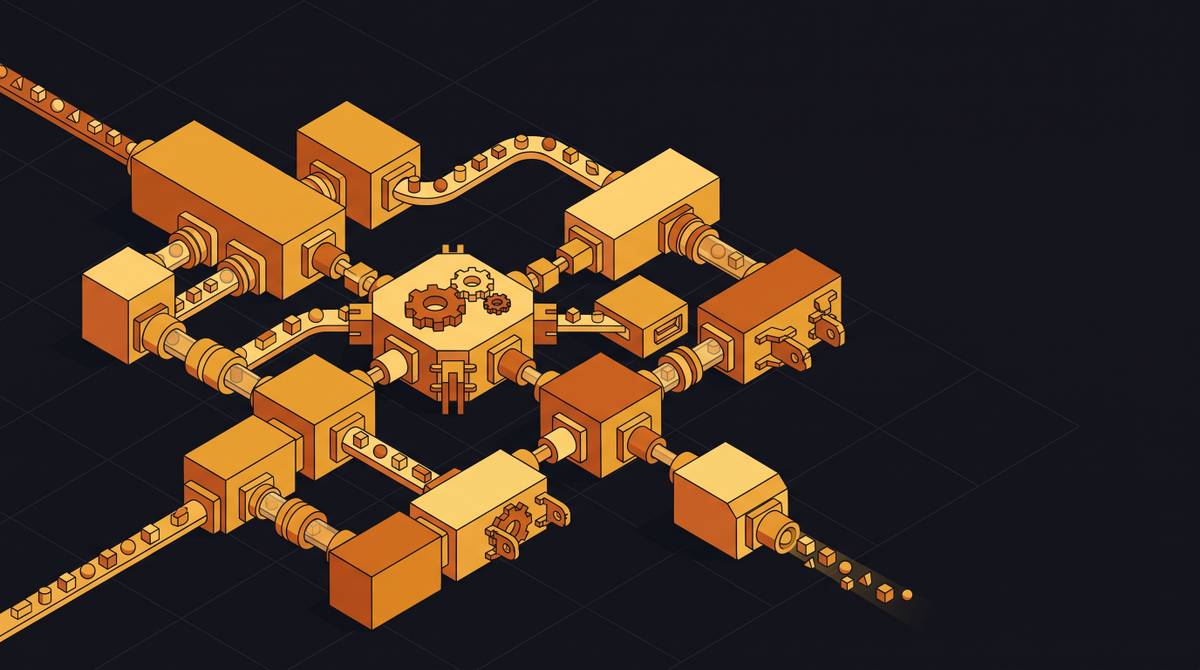
The API Gateway, sometimes specialized into a Backend for Frontend, aggregates data from multiple services on the server side, eliminating chatty client-to-service calls before they reach the client. Authentication, rate limiting, and routing are centralized in one place instead of duplicated across every service.
The Circuit Breaker pattern stops cascading failure by watching for repeated failures from a downstream service. Once failures cross a threshold, the circuit opens. Instead of letting every new request pile up waiting on a service that isn't answering, it fails fast or serves a fallback.
Bulkhead isolation separates resource pools so a failure in one part of the system doesn't starve resources that another part needs to keep functioning.
Service Mesh pulls retries, timeouts, and mTLS encryption out of individual services and pushes them into a dedicated networking layer, usually implemented through sidecar proxies running alongside each service instance. Service code doesn't need to handle network reliability because the mesh enforces it at the infrastructure level through the sidecar proxies, without requiring changes to application code.
Versioning & deprecation for independent service evolution
What decides whether a microservices architecture ages well is how well its service contracts hold up under change. A breaking change in one service's API doesn't stay contained. Every service that calls it feels it immediately, and the damage scales with however many callers depend on that contract. Poor API design compounds: bad contracts propagate, breaking changes cascade outward, and tightly coupled interfaces end up harder to change than the monolith they replaced.
Versioning is how teams manage this without freezing in place. URL path versioning, /v1/ and /v2/, is the visible option: easy to route, easy to retire when the time comes. Header-based versioning and content negotiation keep URLs cleaner, at the cost of being harder to debug. Most experienced teams lean toward backward-compatible evolution wherever they can: add optional fields, deprecate slowly, and keep schema stability the default rather than cutting a new version every time something small changes.
RFC 9745 standardized the Deprecation HTTP header, so retiring an API follows a defined sequence. Announce the deprecation with the header itself and a dated Sunset header. Mark the operation deprecated in the OpenAPI spec so tooling picks it up automatically. Publish a migration guide with real before-and-after examples. Give consumers six to twelve months. Then, on the sunset date, return 410 Gone so callers fail loudly instead of quietly receiving stale or incorrect behavior.
When to use gRPC instead of REST
gRPC's performance advantage is real and quantified: binary Protobuf serialization delivers 4 to 10x throughput over REST/JSON for the same workload, with payloads 3 to 11x smaller than JSON for the same data and serialization 8 to 12x faster. HTTP/2 multiplexing lets multiple calls share a single connection, which eliminates the head-of-line blocking that REST over HTTP/1.1 is subject to.
gRPC is not natively supported in browsers, so it is a poor fit for anything public-facing unless there is a transcoding gateway translating on the way in. gRPC is fast internally; REST is universal externally.
Most teams land on a split that plays to both strengths. REST handles public APIs and third-party integrations, where broad compatibility with existing clients and familiar tooling take priority. gRPC takes over for internal service-to-service calls where throughput and latency are the primary concern. GraphQL fills a third niche for frontend clients that need to specify exactly what data they want instead of receiving a fixed response shape. It is already running in production at more than half of surveyed enterprises https://www.javacodegeeks.com/2026/02/graphql-vs-rest-vs-grpc-the-2026-api-architecture-decision.html https://www.alphonsolabs.com/api-trends-2026/. REST still appears in roughly 93% of surveyed API stacks and powers approximately 83% of public web APIs https://voyager.postman.com/doc/postman-state-of-the-api-report-2025.pdf https://blog.buildbetter.ai/mcp-vs-rest-api-why-product-teams-are-switching-in-2026/.
Security every REST service boundary must enforce
Every REST call crosses a network boundary, and in microservices that handoff happens hundreds or thousands of times a day, each one a potential point of failure or compromise.
API keys alone are insufficient for anything running in production. OAuth 2.1 is the current baseline for token handling, with PKCE required and the implicit flow removed. Short-lived JWT tokens limit the damage a stolen token can do. For internal traffic between services, mutual TLS requires both sides to authenticate, with the service authenticating to the client as well as the client authenticating to the server. The service mesh layer is the natural place to enforce mTLS uniformly across every service without requiring each engineering team to implement it in their own code.
Designing REST APIs for AI agent consumers
APIs used to have one audience: developers writing code that a human eventually interacted with. That is no longer the whole picture. APIs are now powering AI agents, and that shift raises the stakes for security, governance, and API design.
51% of organizations have already deployed AI agents, and 35% plan to deploy within two years https://www.levo.ai/resources/blogs/postman-state-of-the-api-report. Yet most APIs sitting in production were built for human-scale use. Agents run continuously, in parallel, without a human pausing to sanity-check a response. Only 24% of developers currently design their APIs with agents in mind, which leaves a significant gap between what is deployed and what has actually been built for agent consumption https://www.jamdesk.com/blog/api-docs-marketing-tool.
Agents require things human developers often overlook. Documentation has to be genuinely machine-readable, since an agent parses it to determine what an endpoint does and how to call it correctly. Error messages need substance: "invalid parameter, expected integer, received string" gives an agent something it can act on, while a bare 400 does not. Contracts need to remain stable, because an agent cannot adapt to an unannounced breaking change the way a human developer can. It fails repeatedly until someone notices.
Statelessness, clean URLs, sane versioning, and circuit breakers remain the backbone regardless of who or what is consuming the API. Teams with API contracts across REST, GraphQL, and gRPC report up to a 35% reduction in mean time to repair https://www.alphonsolabs.com/api-trends-2026/, and teams that use formal API contracts ship 23% faster on new integrations https://apiscout.dev/guides/rest-vs-graphql-vs-grpc-apis-2026.
Sources
- REST APIs vs Microservices: Key Differences | DreamFactory
- REST APIs in Microservices: Best Practices and Pitfalls | by Hossein Nejati Javaremi | Medium
- The Role of APIs in Facilitating Microservices Communication
- Microservice Communication: A Complete Guide 2026
- 15 API Trends for 2026: REST, GraphQL, gRPC Changes
- businesswire.com
- nordicapis.com
- solace.com