API Integration Explained for Product Teams
Product teams shape integration strategy—not just engineers.
API integration is a task that gets handed to engineering, and then often forgotten about. It's also a product decision that shapes what your product can do, how fast it can grow, and what it costs to keep alive. The usual workflow, where product writes a requirement, engineering builds it, and product reviews the result, treats integration like plumbing. A better mental model treats it like the floor plan.
What an API integration actually does, in terms that matter for product thinking
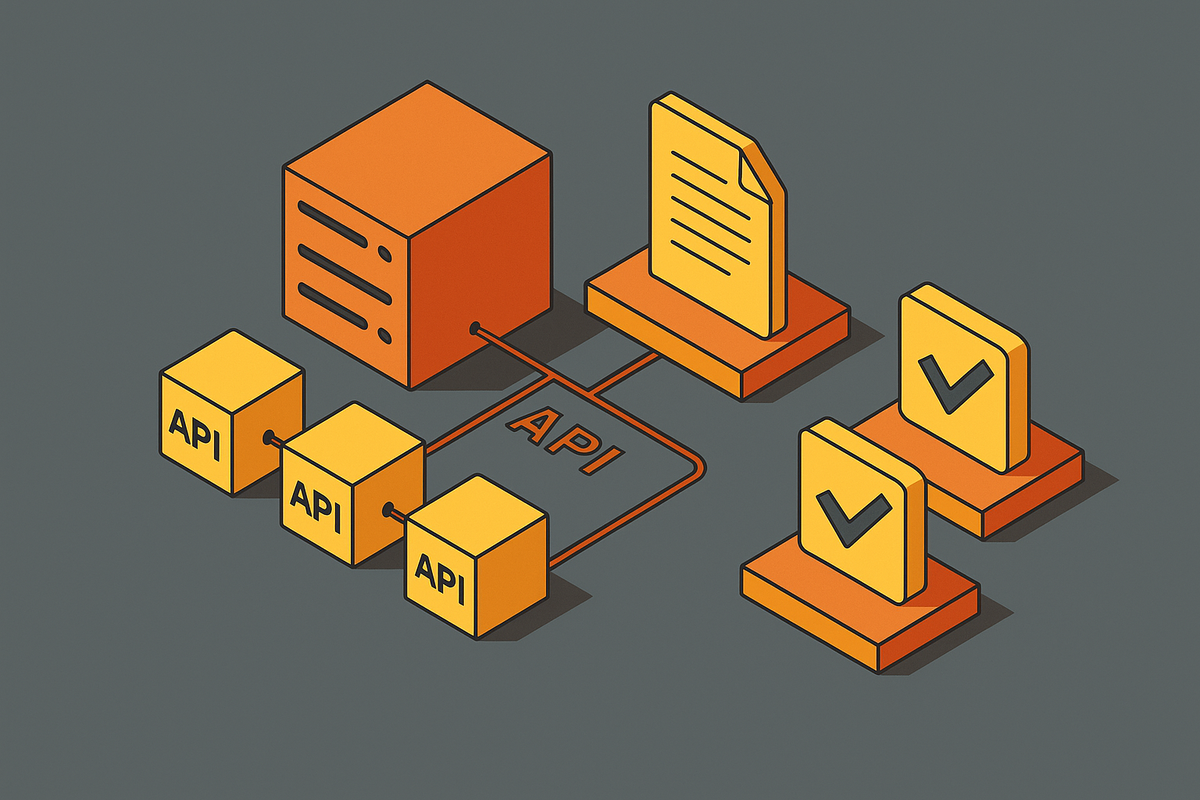
Strip away the jargon and the mechanism is simple. Your product (the client) sends a request to some external system (the server), which sends back a response, usually structured as JSON, that your product can read and use. That's the whole transaction, repeated billions of times a day across the internet.
What that mechanism enables is where product thinking comes in. Integrations do three things:
- Fetch data your product doesn't generate itself, like financial records, identity checks, or a user's location
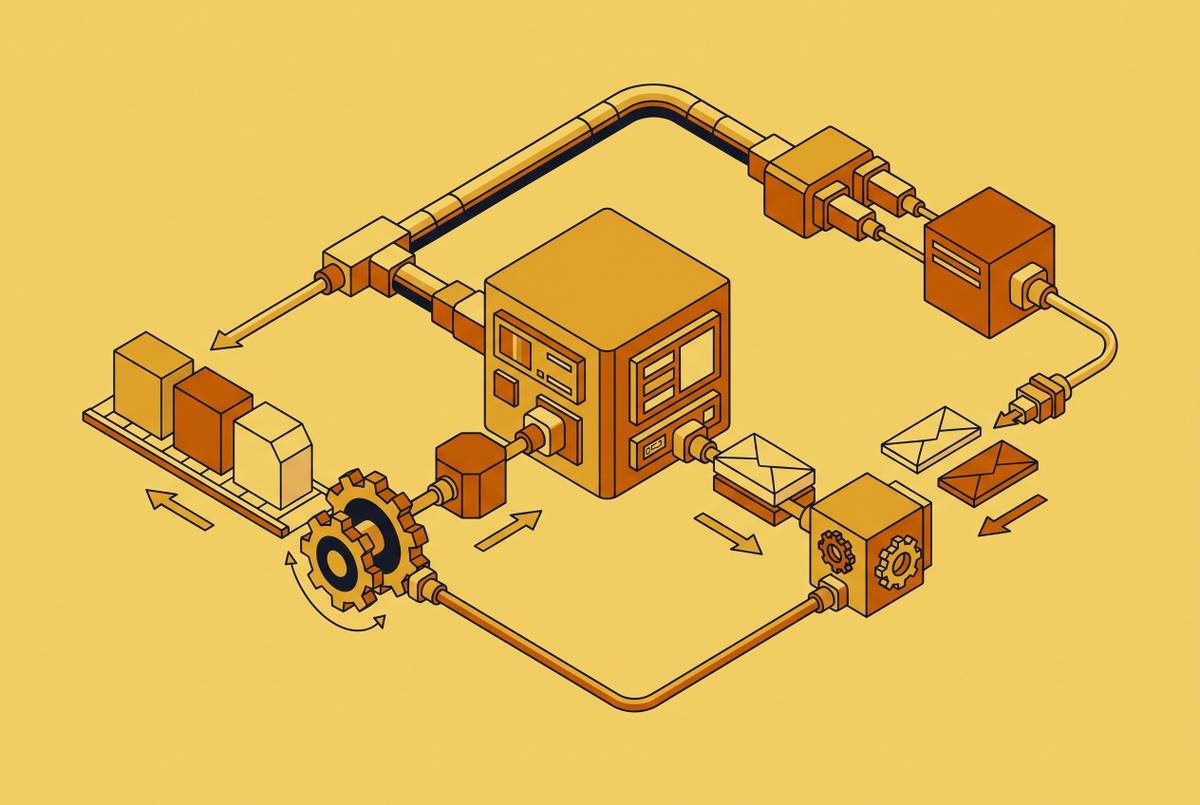
- Automate workflows, triggering an action in another system without a human copying and pasting between two tabs
- Sync state, so two systems agree on reality without someone reconciling them by hand
Think about the difference between a standalone app and a platform. A standalone app is self-contained, sure, but it's also an island, and nobody visits an island unless they really have to. A platform, by contrast, plugs into the tools people already use every day, which means it shows up in their workflow instead of asking them to leave it.
Here's a boring but honest example. A product manager sets priorities in a project tool, and those priorities flow into the engineering tracker automatically. When an engineer updates a ticket's status, it flows back, with no copy-paste and no "hey can someone sync the two boards" meeting that could've been an email. That quiet handoff is an integration doing its job so well nobody thinks about it.
By 2024, the average application ran on somewhere between 26 and 50 APIs, according to Postman's State of the API Report, and this reflects something structural. Every API your product consumes is a dependency you've chosen to take on. Every API you expose is a surface you've chosen to maintain. Choose wisely, because you're the one who has to live in the house you build.
The market context that explains why integration decisions have gotten more consequential
The API management market hit $6.89 billion in 2025 and is projected to reach $32.77 billion by 2032, growing at roughly 25% a year, and this reflects an entire industry built around helping other software talk to each other.
Look at what the biggest platform businesses actually are. Stripe processed more than $1.9 trillion in total payment volume in 2025. Twilio pulled in $5.07 billion in fiscal year 2025 revenue, almost entirely from API consumption. Shopify supports more than 8,000 third-party apps running on its APIs. For these companies, the API is a core part of the business, not an incidental feature bolted on afterward.
Meanwhile, the average organization now juggles 122 different SaaS tools, according to BetterCloud's 2024 State of SaaSOps report. Each one is a potential integration point, and each one is also a potential headache, a potential outage, a potential 2am page. Managing that sprawl isn't a technical footnote; it's a genuine operational problem that somebody with a product hat needs to own.
The industry knows this. In Postman's annual survey of around 5,600 to 5,700 developers, the share of organizations calling themselves "API-first" climbed from 66% in 2023 to 74% in 2024 to 82% in 2025. API-first means you design and agree on the API contract before anyone writes application code, rather than after the feature ships and someone realizes the data doesn't line up. Product teams that treat integration as a footnote at the end of the sprint are, frankly, running a different playbook than everyone else on the field.
The main API types and what each one signals about a product's design choices
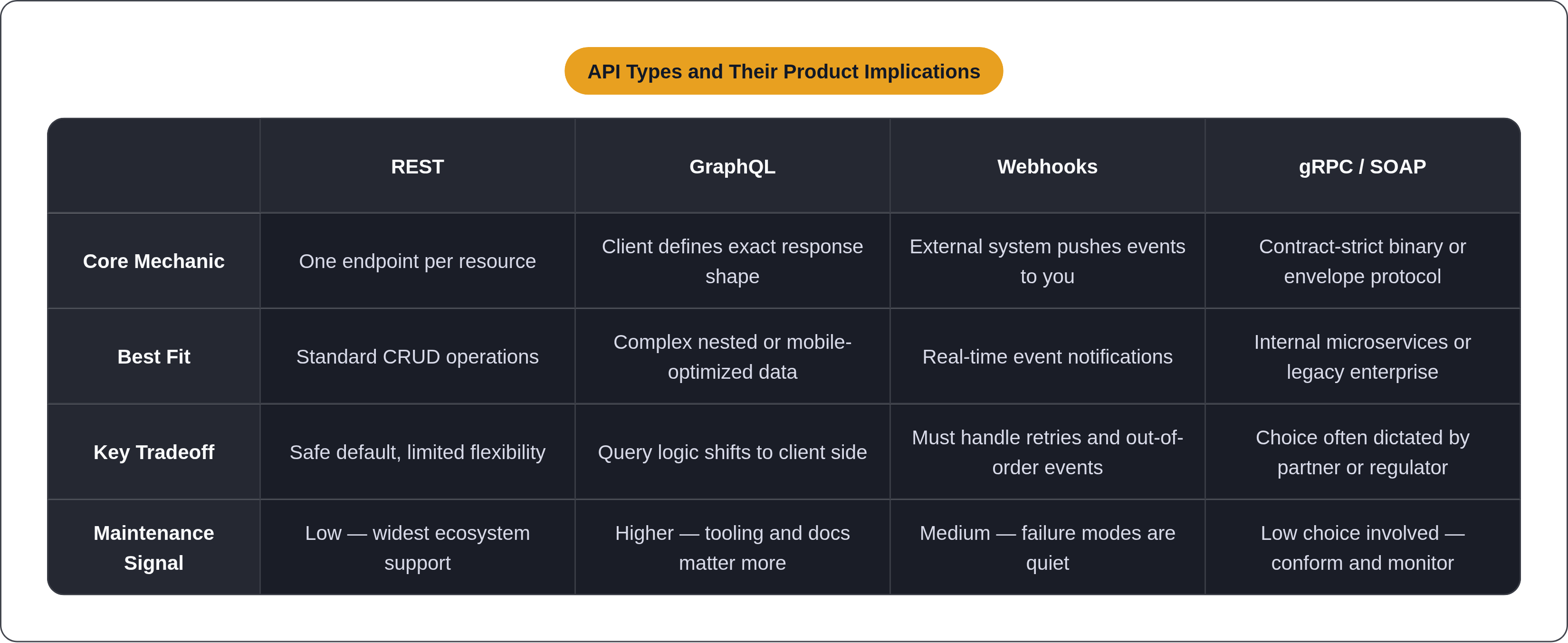
You don't need a computer science degree to reason about API types. You need to recognize what each one commits you to, the way you'd recognize that ordering the tasting menu commits you to a longer dinner than ordering a burger.
REST is the default, and for good reason. Standard HTTP methods, one endpoint per resource, no memory between requests, together handling standard create-read-update-delete operations well. Nearly every partner you'll ever integrate with supports it, and choosing REST is choosing the safe, well-lit path.
GraphQL shows up when REST starts either handing you too much data or not enough. One endpoint, and the client specifies exactly what it wants back. Meta built it and released it publicly in 2015. It's a good fit for complex nested data or mobile apps trying to keep payloads small. The tradeoff: more query logic lives on the client side, so documentation and tooling start to matter a lot more than they do with REST.
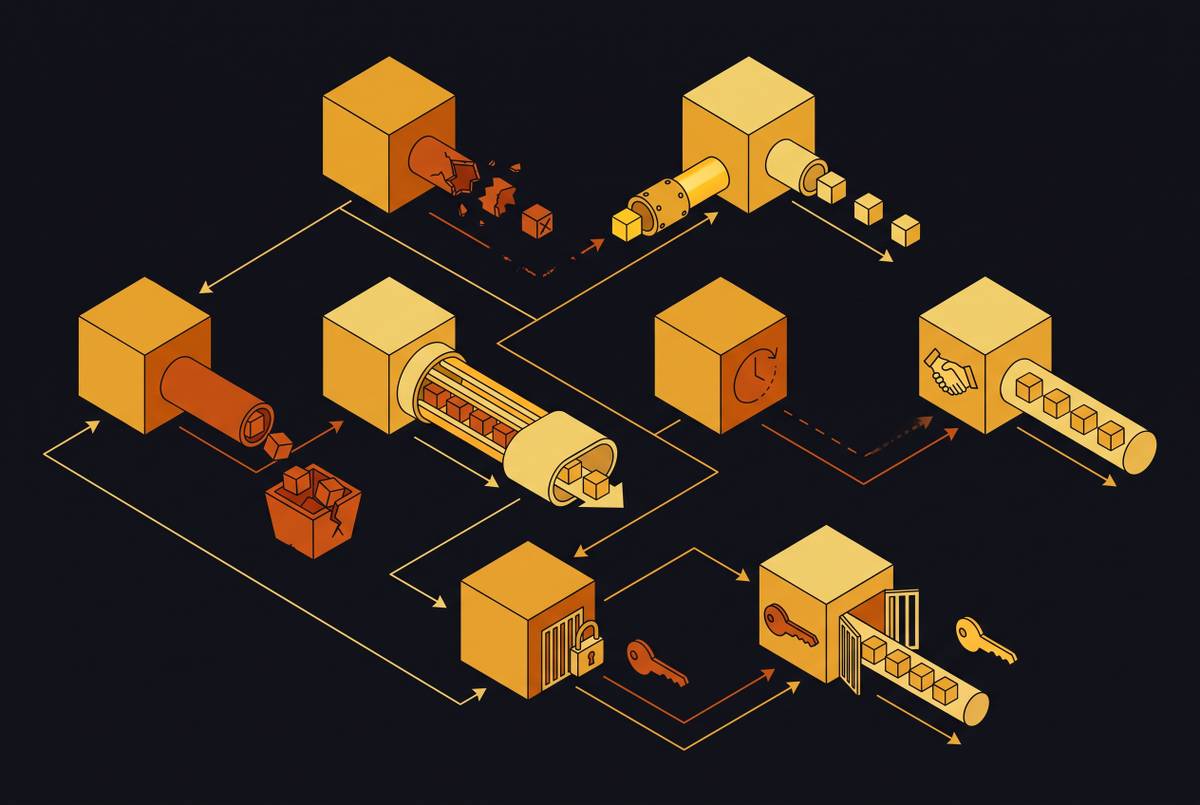
Webhooks flip the model. Instead of your product repeatedly asking "anything new yet? anything new yet?" like a kid in the backseat, the external system pushes a notification when something actually happens: payment confirmations, CRM updates, partner events, that sort of thing. It saves you from wasteful polling, but it hands you a new problem: your product now has to handle retries, duplicate deliveries, and events that show up out of order. The failure modes are quieter, which somehow makes them worse.
gRPC and SOAP live in specialized lanes. gRPC handles high-performance communication between internal microservices, while SOAP shows up in legacy enterprise systems, especially in finance and healthcare, where contract strictness beats flexibility every time. If a partner or a regulator tells you to use one of these, the choice has effectively already been made for you, and you're conforming.
The type of API you pick shapes latency, consistency, and how much maintenance you're signing up for down the road, and it shouldn't be a default. Expect the menu to keep growing as AI-native APIs and event-driven designs muscle their way into the conversation.
What the product manager's actual role is in an API integration project
The PM sits in the middle of users, commercial teams, and engineers, translating between all three. Nobody's asking a product manager to write the integration code, but everybody's counting on that PM to ask the right questions and to notice when a tradeoff is being made quietly, before it becomes a loud problem three months later.
If your product exposes APIs to partners or customers, the documentation, the onboarding flow, the debugging tools; all of that is product surface. This work needs ongoing ownership, not a PDF engineering writes once and forgets. Poor API design reportedly generates roughly three times more support tickets than well-designed APIs, and weak documentation eats up about 40% of a developer's time just searching for answers instead of building. Those numbers describe product quality, even though they often get filed under engineering.
Product managers running API-facing products also carry backlog decisions that don't show up in a typical roadmap template:
- Balancing technical debt against the next feature a big customer is asking for
- Deciding when to build a native integration versus when to just support the third-party platform that already does it
- Prioritizing security and compliance work that no user will ever see, but that decides whether the enterprise deal actually closes
There's a perception gap worth sitting with here. GitLab's 2024 DevSecOps survey found developers use somewhere between 6 and 14 tools a day, while the executives above them guessed 2 to 5. That gap isn't trivia. A product manager who underestimates the actual tangle of tools their team lives in every day is going to set a timeline that's wrong before the kickoff meeting even ends.
The API by itself is only part of the picture. The product is the API plus the docs, the SDKs, the sandbox environment, the changelog, the support path when something breaks at 4pm on a Friday. All of it is product work, whether or not it's labeled that way on the org chart.
The maintenance and reliability problems that only become visible after an integration ships
Building an integration happens once, but keeping it alive is forever, or at least it feels that way around the third time it breaks for no announced reason.
Here's the sneaky part: not every API change counts as "breaking" by the provider's own definition, but it can still break your product. In early 2024, Harvest renamed a field in their API response from client.name to client.display_name. Both fields coexisted for a while, so technically nothing broke and no announcement went out. Any team still reading client.name started getting back empty strings, with no error and no 400 status code screaming for attention. Just quiet null values flowing straight into someone's reporting dashboard, making the numbers look wrong for reasons nobody could immediately explain.
That silent failure mode is more common than people like to admit, and it eats real time. The lunar.dev API consumer survey found that 36% of teams spend more time troubleshooting APIs than building new features. That's more than a third of engineering capacity going toward keeping the lights on instead of moving the product forward.
Sometimes it's not even a technical problem. Postman's 2024 State of the API Report found that 93% of API teams still run into collaboration blockers, meaning the code usually isn't the hard part. Getting the right people in the room, at the right time, with the right context, is the hard part.
Then there's the queue. Integration requests routinely sit behind "more important" projects, and business teams end up waiting months for a connection that could've been wired up in an afternoon with the right platform. Underneath the technical framing, that delay is usually a prioritization failure. Integrations need a maintenance budget, some form of monitoring, and a named owner, not just a ticket that gets closed the day it first works and never looked at again.
Security exposure that product teams are responsible for understanding, even if not resolving
Here's the reality that should get your attention: API security incidents are not rare edge cases. Most organizations encounter them regularly, and the pattern holds across industries and company sizes.
APIs are, by design, programmatic doors into your data and your users' data. Every integration you consume, and every one you expose, is a door someone has to be watching.
The OWASP API Security Top 10 lays out where the real risk sits:
- Broken Object Level Authorization is a leading concern: an API handing back more data than the person asking for it should ever see
- Broken Authentication is another critical vulnerability: credentials that get guessed, reused, or grabbed in transit
- Broken Object Property Level Authorization is a further common failure: exposing or letting someone modify object fields they shouldn't be able to touch at all
None of these are exotic hacker-movie scenarios; they come from decisions made way back during scoping, not from some late-night implementation bug.
A product manager's job here isn't to audit the code line by line. It's to ask: who's allowed to call this API, what data comes back when they do, and how would we even know if something odd started happening? Enterprise buyers will ask about authentication standards, rate limiting, audit logs, and data residency before they sign anything. Those questions need real answers at the product level, not a shrug and a promise that "security will look into it."
How to evaluate whether to build, buy, or use a middleware platform for a given integration
There are three roads here, and picking the wrong one is how teams end up maintaining a Frankenstein's monster of custom code nobody wants to touch.
Build it natively when the integration is genuinely part of what makes your product different, when you need tight control over how data gets mapped and errors get handled, and when the API you're connecting to is stable and well-documented. Building makes sense when the thing you're building is actually yours to build.
Use an integration platform (iPaaS, or an embedded integration tool) when the connection is plumbing rather than differentiation. If keeping an integration alive is pulling engineers away from the actual product, that's the signal. Remember that stat from earlier, the 36% of companies spending more time troubleshooting than building? That's the ceiling on a "we'll just build everything ourselves" strategy, showing up right on schedule.
Use the provider's native connector when one already exists and just needs configuration. Sometimes the fastest path is the one that requires zero code and one afternoon of setup.
Before committing to any of the three, ask the unglamorous questions:
- How stable is the provider's API, and what's their actual versioning and deprecation policy?
- What data crosses this integration, and what does that mean for security and compliance?
- Who owns this thing once the engineer who built it leaves for another job?
- What does failure look like from the user's side, and how fast would we even notice?
The financial upside of getting this right is real. Among fully API-first organizations, 43% generate more than a quarter of total revenue from APIs, compared to just 16% among organizations that aren't API-first. Integration strategy and revenue aren't loosely related ideas; they're tightly linked outcomes. Revisit this evaluation whenever a provider makes a big change, when usage spikes, or right after a security incident makes everyone suddenly very interested in how the integration actually works.
The shift from APIs as connectivity to APIs as a product line — and what it means for how product teams are organized
APIs used to be the invisible wiring behind the product. Now they're often the product itself, with a price tag, a roadmap, and a customer base of their own. Postman's data shows 62% of companies now generate revenue directly from APIs, meaning the API access itself is the revenue source, not just a feature built on top of one.
That changes the org chart. An API that generates revenue needs a roadmap, a pricing model, a support team, and a product manager who treats developers as the actual customer, not as an internal resource to be managed. It needs a changelog people actually read and a deprecation policy that doesn't blindside partners the way Harvest's quiet field rename did.
The teams getting this right have moved past treating "integration" as a technical checkbox. They're treating it as a business line with its own metrics: adoption, time-to-first-call, support ticket volume, churn among developers who gave up and went elsewhere. Gartner has found that the ability to integrate with other technology now ranks in the top three factors in purchasing decisions for 34% of software buyers, and that reflects market position, decided by how well your API actually works for the person trying to build on it.
The mental model is simple, even if the execution rarely is: every integration is a relationship, not a one-time build. Someone has to own it, watch it, and answer for it when it breaks at the worst possible time, and might as well make sure that someone knows what they're looking at.