Microservices Architecture Patterns for API-First Products
Successful microservices require thoughtful boundaries, not just code splitting.
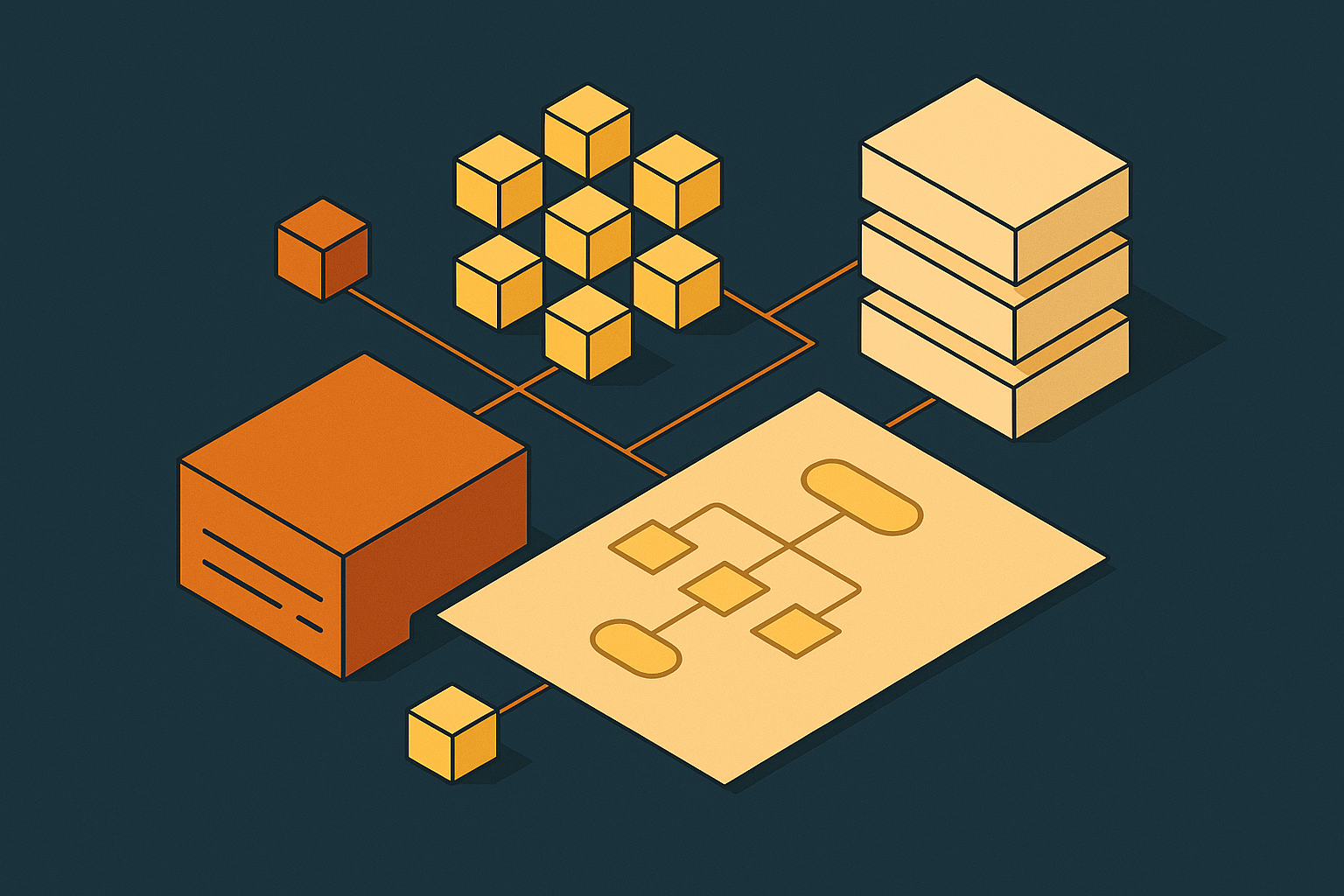
Microservices don't fail because teams pick the wrong technology; they fail because teams decompose a monolith into smaller pieces, stop there, and assume the architecture will reward them automatically, but it won't. The patterns covered in this piece are what separate a system that actually ships faster and scales selectively from one that just moved its problems onto a network.
Why API-first microservices demand more than decomposition
Independent deployability, selective scaling, faster iteration: that's the pitch for microservices, and it's a good one. That payoff appears only when a specific set of architectural patterns gets applied on purpose. Skipping them leaves a team with a distributed monolith, the same tangled dependency graph as before, now with extra network hops bolted on for flavor.
If shipping a feature still requires releasing three services in a specific order, nothing has actually been decoupled. A monolith split into five pieces that all have to deploy together is one monolith wearing five name tags.
The real payoff looks different. A search service under heavy load should scale on its own, without dragging checkout along for the ride, paying for compute it doesn't need. That only happens if the service boundaries were drawn correctly in the first place, which is a design problem, not an infrastructure problem.
None of this comes free. Network calls introduce latency that a function call never had. Keeping data consistent across a dozen independently-owned databases is genuinely hard, and debugging a system with 50 moving services takes more discipline than debugging one. Everything that follows in this piece is about avoiding that outcome.
Domain-driven design and service boundaries
The single most consequential decision in a microservices system is where one service stops and the next one starts. Get that wrong and no amount of clever tooling fixes it later. Domain-driven design gives teams a concrete method for drawing those lines around business capability, rather than around whoever happens to own which database table this quarter.
The common mistake is cutting services along technical layers: a "database service," a "UI service," a "notification service." That sounds tidy on a whiteboard. In practice it couples the wrong things together, because a single business change now has to ripple through three or four of these technical layers at once, which is exactly the dependency graph the monolith had, just distributed across a network now charging a latency tax for every hop.
The better cut anchors each service to one business capability: checkout, inventory, notifications. A change to how discounts get calculated should never touch shipment tracking. If it does, the boundary is drawn in the wrong place.
Domain-driven design calls the resulting unit a bounded context, and it maps directly onto a service boundary. Inside that boundary, a term means one specific thing and stays consistent. "Order" means something different to a sales team than it does to a warehouse team, and trying to force one shared definition across both creates exactly the kind of coupling that decomposition was supposed to kill. Keep each team's version of "order" inside its own service, and definitional drift stops being a system-wide problem.
The single responsibility idea earns its keep at the service level too. An order-processing service shouldn't also carry user authentication, even when the same engineer happens to build both this sprint. The boundary has to track business capability, not current team structure or who's free on Tuesday. And each service owning its own database is what makes the boundary stick technically. Share a database across two services and you've recreated the coupling decomposition was supposed to remove, just with a prettier API sitting on top of it.
The objection surfaces in planning meetings: there's no time for formal domain modeling, the deadline is next month. Skipping that work produces an Uber-scale mess. The company's 1,000-plus services didn't appear because nobody tried to organize them; informal decomposition still accrues dependency debt, it just defers the invoice.
The Strangler Fig pattern for teams that cannot start from scratch
Almost nobody gets to design a microservices system on a blank whiteboard. Most teams have a monolith already running payroll, checkout, or patient records, and ripping it out in one move is the kind of risk that gets architects invited to very uncomfortable meetings. The Strangler Fig pattern offers an incremental, controlled path off the monolith for teams facing exactly this situation.
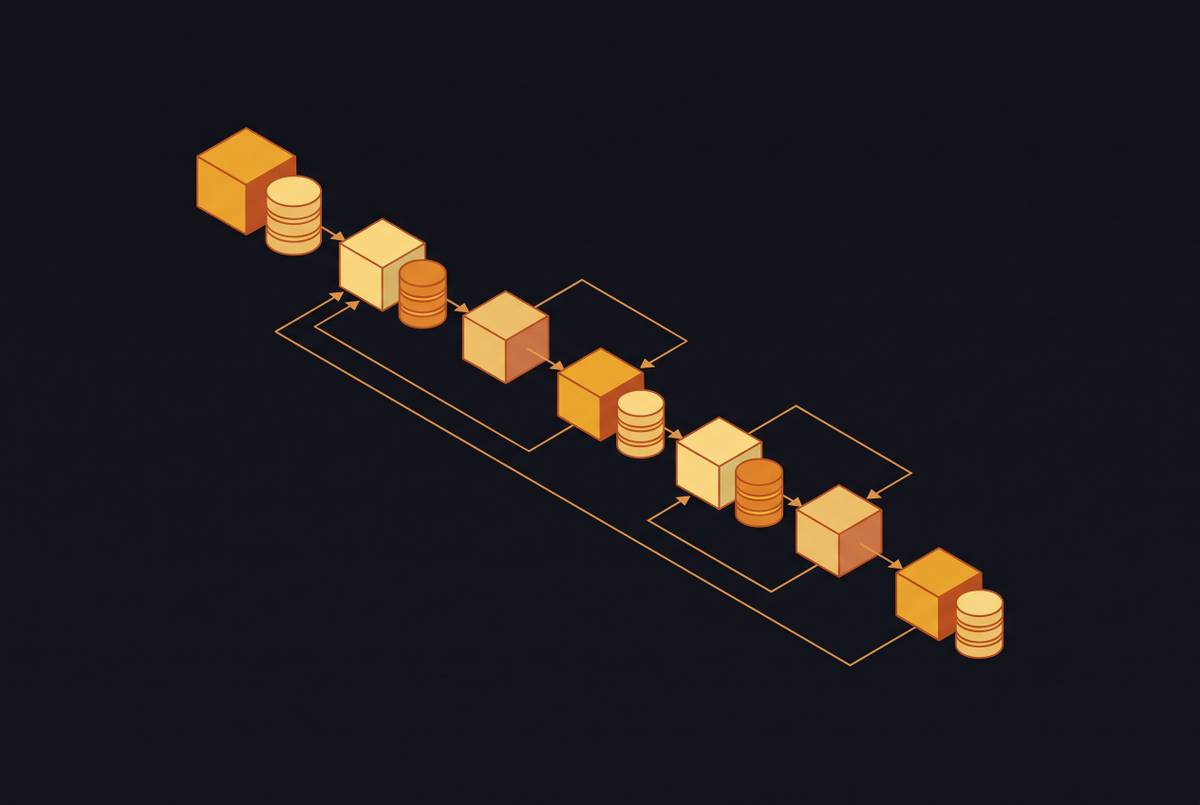
The mechanism is simple to describe even though it takes patience to execute. New traffic gets routed to new microservices as they come online, while the monolith keeps handling everything that hasn't been migrated yet. Capability by capability, the old system gets strangled out, the way the actual strangler fig plant grows around a host tree until the original trunk is no longer load-bearing. Nobody kills the tree on day one. It just gradually stops being necessary.
The order of extraction matters more than the mechanics. Whatever has the clearest bounded context should come out first, not whatever looks easiest to unplug this week. Chase easy wins and the hard, tangled parts of the monolith just pile up at the end of the project, which is exactly when a team has the least patience left to deal with them.
Amazon's Prime Video team offers a useful, slightly inconvenient data point here. Their Video Quality Analysis component got migrated back into a single-process architecture, and that move cut infrastructure costs by 90%, the Prime Video Tech engineering blog reported. That component's specific data transfer pattern made in-process calls dramatically cheaper than distributed ones, so the rest of Amazon's architecture stayed on microservices because that's what fits everywhere else. The decision was made component by component, not as a referendum on the whole approach.
That's the actual lesson to take from Prime Video: architecture is a per-component judgment call, not a company-wide mandate to apply uniformly and never revisit. The Strangler Fig pattern assumes the same thing. Some parts of the monolith deserve extraction. Some might not, and that's a legitimate answer too.
The API gateway pattern
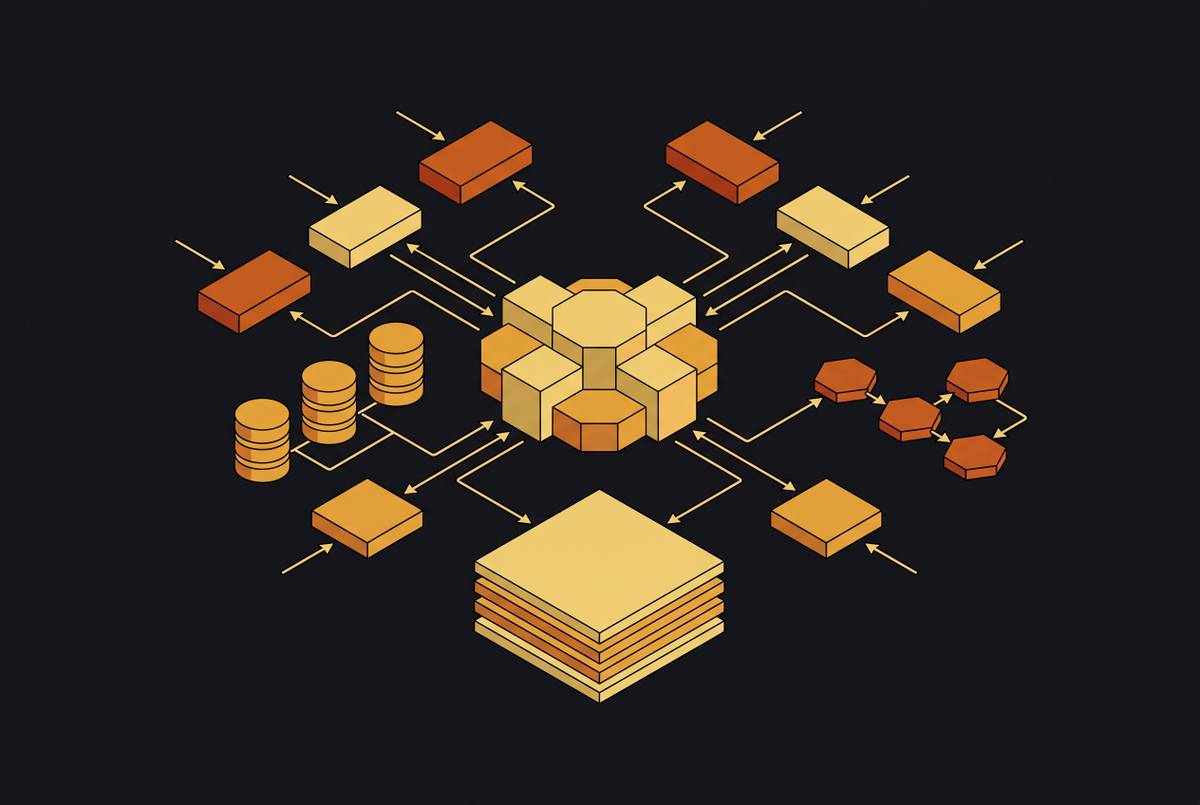
Once services are decomposed along sensible boundaries, something has to control how the outside world talks to them. That's the API gateway's job: it's the single entry point for every external client request, and its real value runs deeper than routing traffic to the right place.
Duplicate that work across a dozen services and the security surface grows every time a new service gets added, since each one is a place where the auth logic could have a bug.
A gateway pulls all of that into a single enforceable layer. It routes each request to the correct downstream service. And it can aggregate responses when a client needs data pulled from more than one service in a single round trip, saving that client from making three separate calls and stitching the results together itself.
A fleet of gateways, each governing a different traffic zone, is a normal operating model, not a sign that something went wrong in the architecture.
The Backend for Frontend pattern
A single generic API trying to serve a mobile app, a web dashboard, and a partner integration all at once runs into a basic math problem: what one client needs, another client doesn't, and no single response shape satisfies all three. Partner integrations end up missing fields they require and have to make follow-up calls to get them.
A mobile client on a slow connection wants a small, pre-aggregated response that doesn't waste bytes. One gateway trying to serve all three turns into a maze of conditional logic, with special cases bolted onto special cases until nobody wants to touch the routing config anymore.
The BFF pattern solves this by giving each client type its own thin backend layer. Each BFF calls the same internal microservices everyone else calls, but assembles the response specifically for that client's needs, mobile gets its compact payload, the dashboard gets its richer one, and the partner gets its stable contract, all without the internal services knowing or caring which client asked.
This is the API-first principle doing its actual job. The BFF is where the API contract the client team designed against gets built. The shape of the response follows what the consumer actually needs, not whatever shape happens to fall out of the internal service model.
The service mesh and the perimeter
The gateway handles traffic coming in from outside. Once a request is inside the system and bouncing between services, a different layer takes over: the service mesh, which handles problems the gateway doesn't; mature architectures run both.
The gateway secures and routes at the perimeter. The mesh optimizes, secures, and monitors the service-to-service traffic happening behind that perimeter, where most of a request's actual journey takes place. A mesh gives services mutual TLS between each other without every team having to implement encryption by hand. It gives circuit breaking on inter-service calls, so when one service starts failing, the services calling it stop hammering a dead endpoint and start failing fast instead, the same way a circuit breaker in your house trips before the whole wiring catches fire. It handles retries with backoff, distributed tracing as a request hops across five or six services, and load balancing between service instances, all without each individual service having to encode that logic itself.
Istio, Linkerd, and Cilium are the established players in enterprise environments as of 2026.
The resilience behavior a mesh enforces, circuit breaking, retries with backoff, isolating failures so they can't spread, is what keeps one slow or broken service from taking the rest of the system down with it. That's the practical payoff: a bad day for one service stays that service's bad day.
Event-driven communication and service decoupling
Even with clean boundaries, a gateway, a mesh, and a BFF in place, a system can still end up coupled at runtime if services talk to each other the way a monolith's internal functions used to talk: synchronously, waiting on a response before moving forward.
All the deployment independence promised on the architecture diagram evaporates the moment real traffic hits a real outage.
Event-driven communication breaks that link. Service A publishes an event to a broker and moves on. Apache Kafka is the dominant backbone for this pattern across enterprise microservices today, with particularly heavy use in financial transaction processing and AI inference pipelines.
The tradeoff that comes with this decoupling is eventual consistency. Managing that gap deliberately, rather than hoping it resolves itself, is the job of the pattern covered next.
The Saga pattern and CQRS for cross-service data consistency
Traditional two-phase commit, the classic way a single database guarantees a transaction either fully happens or fully doesn't, falls apart once a transaction has to span multiple services. Trying to force it across service boundaries just reintroduces the tight coupling the whole architecture was built to avoid. The practical alternative is the Saga pattern: a sequence of local transactions, each one scoped to a single service, chained together to get the same end result without a single database lock holding everything hostage.
Sagas come in two flavors. Choreography-based sagas have each service react to events published by the one before it, no central coordinator required. Orchestration-based sagas use a central coordinator that issues commands and tracks progress step by step. Most teams start with choreography and introduce an orchestrator later, once the saga has enough steps that nobody can trace the flow by memory anymore.
CQRS, Command Query Responsibility Segregation, tackles a related but separate consistency problem. The read model can lag slightly behind the write model and still be useful. Each side gets optimized for what it actually needs to do instead of being forced into one compromise schema that serves neither well.
Event sourcing pairs naturally with CQRS. The bonus that falls out of this setup: a complete audit trail of every state change the system has ever made, which matters enormously for financial systems and anything with compliance requirements breathing down its neck.
Observability in a distributed API-first system
None of the patterns above are worth much if nobody can tell what the system is actually doing once it's live. Observability in a microservices architecture isn't monitoring you bolt on after launch as an afterthought. It has to be designed into the system from the start, because a request that fails somewhere after crossing six service boundaries is effectively undebuggable without distributed tracing showing exactly where it went wrong.
Three pillars make this possible. Distributed tracing follows a single request as it hops across services, showing where time got spent and where it died. Structured logging produces machine-readable logs, correlated by a shared trace ID, so a log line from service three can be matched to the same request's log line from service one. Metrics track per-service health and performance, rolling up into dashboards that show the system's overall condition at a glance instead of forcing someone to check 40 services one at a time.
Deloitte's Tech Trends 2026 describes future-ready systems as designed for modularity and observability from the outset. That framing puts observability on the same level as modularity and API-first interfaces: a property the architecture is built around, not a dashboard someone adds the week before the first outage.
Sources
- Use Domain Analysis to Model Microservices - Azure Architecture Center
- Designing a DDD-oriented microservice - .NET
- Strangler fig pattern - AWS Prescriptive Guidance
- Strangler Fig Pattern - Azure Architecture Center
- API Gateway Pattern: 5 Design Options and How to Choose
- The API gateway pattern versus the direct client-to-microservice communication - .NET
- What Is API Gateway vs. Service Mesh?
- Service Mesh vs API Gateway: Key Differences