API Integration Patterns for Banking and Fintech
Choose your API pattern before implementation spreads vendor logic through your codebase.

Banking and fintech API integration patterns determine far more than how a product connects to a bank. They decide who takes care of maintenance, consent, reliability, and the next provider change. Choosing a provider before deciding where its implementation ends and the product’s own logic begins can cost the team.
Why most banking API integrations break under production pressure, not during the demo
A sandbox call returns an account balance. Production must also survive retries, expired consent, schema changes, provider outages, reconciliation gaps, and fallback routing. The demo tests a connection.
The structural trouble starts when product services call vendor implementations directly. Authentication, field mapping, and error handling then spread through the codebase, while audit trails scatter across logs and dashboards. A transaction-sync feature becomes a switch statement with fifteen cases, each with its own way to fail. That fragmentation is the bill for postponing the abstraction decision.
How modern financial products are actually assembled — and why the integration layer is where complexity accumulates
By 2026, most regulated financial products use their own systems along with dozens of external APIs. Customers see one product, while orchestration keeps identity checks, AML screening, fraud scoring, cards, payouts, and account connectivity aligned. Core banking remains the system of record. The integration layer translates and brings together the third-party work so that every vendor change need not reach customer-facing code.
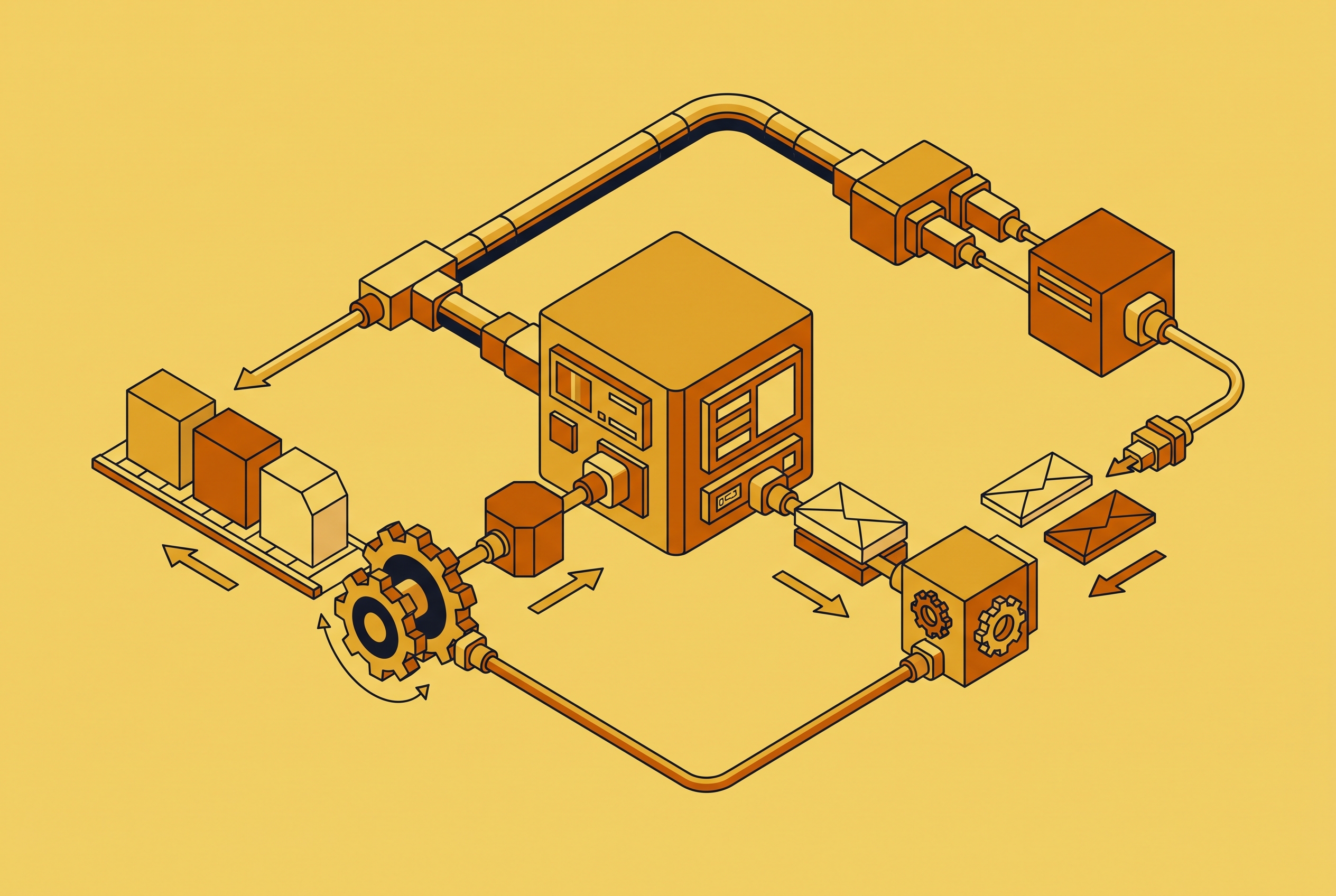
That boundary has several distinct parts. Domain-centric APIs expose jobs such as identity verification or payout initiation through a canonical model, which is the product’s shared representation of those operations. Provider adapters translate that model into each vendor’s fields, errors, and webhook shapes. Orchestration joins the steps into flows, while shared controls handle authentication, secret rotation, retries, idempotency, and audit logging.
Access models also shape the boundary. Public, partner, private, and composite APIs bring different access and commercial requirements, while open banking connectivity and BaaS rails serve different compliance models. Protocol choice follows the integration edge. Choosing the vocabulary before the job is how a team buys connectivity when it actually needs banking infrastructure.
Direct integration — where it earns its place and where its costs compound
Direct integration works well with counterparties that are stable, handle high volume, and stay for the long term. Where a small set of institutions accounts for most transaction volume, owning those connections can justify the maintenance investment and give the team fine-grained control. Control has a legitimate business value here. It is not merely an engineering preference dressed for a budget meeting.
The economics change as institutions multiply. Each adds authentication behavior, schema quirks, error codes, and webhook formats that someone must normalize. One bank may separate pending and booked transactions while another combines them. Token lifecycles and re-consent requirements can differ just as sharply.
Without an adapter boundary, product code has to deal with those differences. Provider upgrades then make releases risky, while teams rebuild retry logic, idempotency, and reconciliation separately for each connection. The first connection understates the ongoing workload. When the product needs broad coverage but a separate infrastructure for each institution would cost too much, aggregation makes sense.
The aggregator model — what it solves, what it transfers, and what it conceals
An aggregator moves institution-specific work upstream. The team connects once, users authenticate through the aggregator’s hosted flow, and the application receives a normalized token. This lets the product cover more institutions through the same API surface. It also shifts responsibility for absorbing many institution-side authentication changes away from the product team.
Plaid provides regional account connectivity, including balances, transaction histories, account authentication, and identity verification. MX emphasizes data enrichment and transaction categorization, while TrueLayer focuses on regional open banking and account-to-account payments. Yodlee supports consolidated portfolio views and liability assessment.
But outsourced connection work is not outsourced accountability. The team still owns consent scope, retention, and downstream data use, while the aggregator’s coverage, pricing, and versioning become product constraints. To switch, the team may have to rebuild hosted consent flows, token handling, and normalization logic. A hybrid can therefore use direct connections for high-volume institutions and aggregation for the long tail. When several aggregators and direct connections must coexist, the product needs a boundary above them.
The unified API layer — what it abstracts, what it costs, and when it is the right foundation
A unified API layer is that boundary. The team owns a canonical domain model, with adapters translating between internal objects and provider schemas. Payment orchestration lives there. Replacing a provider changes its adapter instead of forcing a rewrite of product logic and customer journeys.
Ownership is the benefit and the expense. The team must design the model before it can use it, maintain the adapters, and fund the layer throughout its lifecycle. Apideck offers a managed approach through a normalized API for accounting, ERP, and fintech providers. That differs from building a custom layer, but uses the same canonical-model principle.
The investment fits roadmaps involving multiple regions, provider redundancy, or open finance connectivity. It also fits products that need one home for consent, retention, and audit requirements, or whose aggregator fees and coverage gaps make the abstraction worth owning. Elegance alone does not pay the bill. The return comes from owning idempotency once, centralizing SLA governance, and absorbing provider changes without rebuilding customer journeys.
What production reliability actually requires — idempotency, webhooks, reconciliation, and provider abstraction
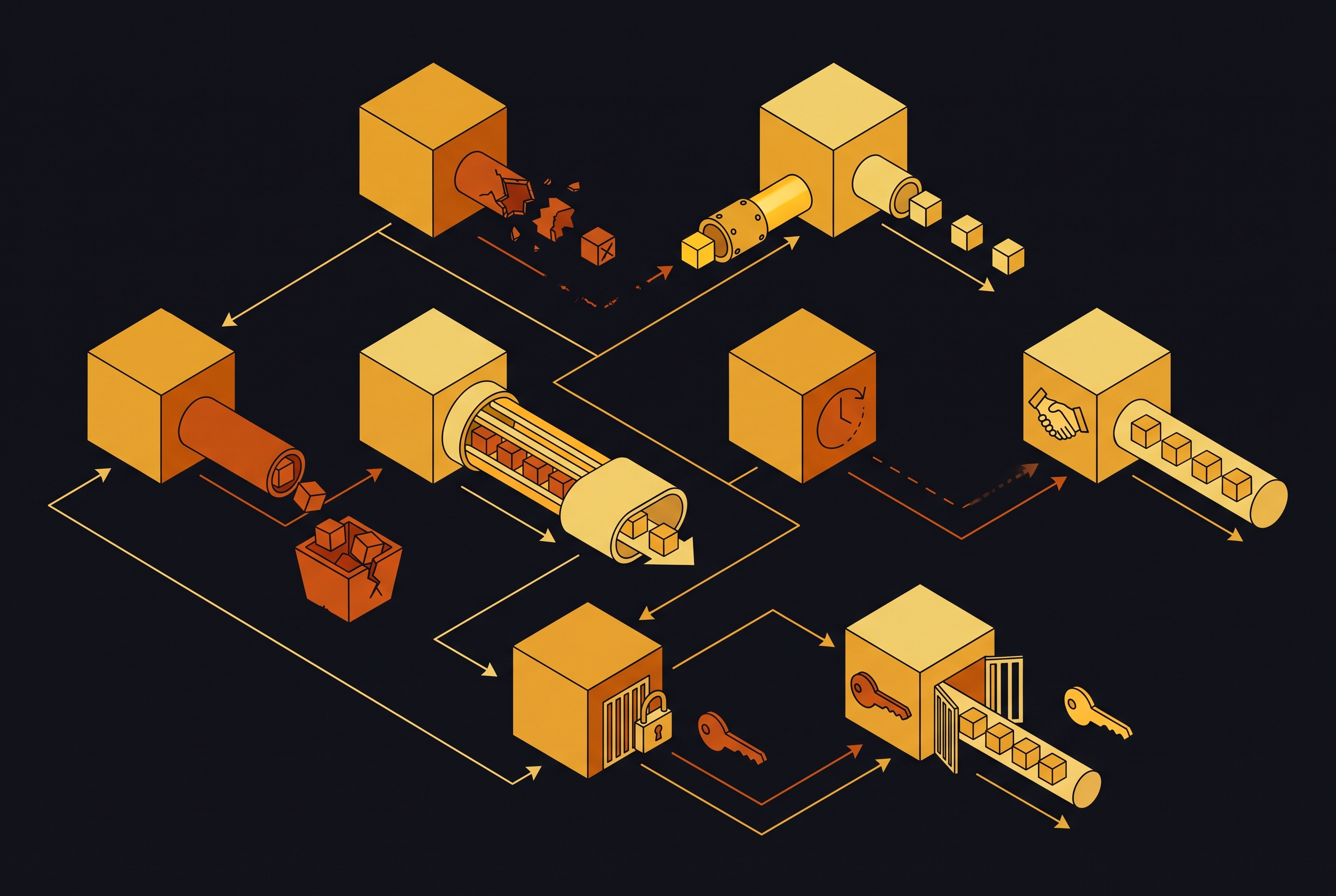
A payment timeout leaves an awkward question unanswered. Did the operation fail, or did the response fail to arrive? Retries therefore need idempotency keys owned at the integration boundary. Webhook consumers also need idempotent behavior from the start because real-time status depends on reliable event processing. A provider’s webhook shape, delivery reliability, and retry behavior are consequently selection criteria.
Reconciliation tests whether the system can account for money. Synapse Financial Technologies exposed the consequence of an infrastructure in which no party had a complete and accurate ledger view, with a shortfall running to tens of millions of dollars. Modern Treasury addresses this operational need through payment operations, real-time reconciliation, and ledgering across ACH, RTP, and wire transfers. The team needs this whichever provider it chooses.
Provider abstraction supplies the remaining resilience tools. Multi-vendor identity verification can support fallback and reduce onboarding drop-off, while circuit breakers fail fast when dependencies degrade to prevent cascading failures. These controls need a coherent layer-level design. A fallback plan that exists only in an incident document is not yet a routing capability.
Consent flows and the open banking compliance surface teams routinely underestimate
Consent determines what data a product may access, for how long, and under what conditions. It therefore belongs inside the architecture. Screen scraping used stored customer credentials and could not express scoped access. APIs secured with FAPI and OIDC support visible, revocable permissions, but only when the integration honors them.
Consent also has an operational lifecycle. Account linking and payment authorization affect retries, support, and the customer journey, and the team needs a clear way to handle expired authorization or bank-driven re-authentication. Treating consent as a one-time event produces silent loss of access. A reliable API cannot compensate for permission the product no longer has.
Regional differences make this a pattern-selection issue. PSD3 and the Payment Services Regulation point toward consistent API performance, fraud data-sharing, and broader liability allocation. In the US, Section 1033 was finalized in October 2024 but is enjoined under a preliminary injunction from the Eastern District of Kentucky while the CFPB runs a new rulemaking. Teams should build toward an industry data-sharing standard and keep their options open so they can change course if a disputed view of the rules changes.
The API security surface in financial services and why shadow APIs are an architectural governance failure
The same fragmentation that scatters consent and audit logic also weakens security governance. When teams release endpoints without complete documentation or central registration, the institution loses a dependable inventory of its exposure. Those shadow APIs can go without maintenance and regular checks for vulnerabilities.
Central governance gives each endpoint an owner and a lifecycle. Structured audit logs and correlation IDs then help make incidents traceable across the integration layer. Without that shared view, discovery becomes an attempt to reconstruct decisions made across disconnected projects. The architecture has developed an attic, and nobody remembers what is plugged in up there.
Legacy and partner infrastructure extend that exposure. Stripe’s 2025 legacy API incident involved a merchant-targeted skimming campaign that exploited a legacy endpoint, showing the fraud risk of unretired infrastructure. Evolve Bank and Trust’s 2024 LockBit ransomware attack exposed millions of records and affected fintech partners including Wise, Affirm, and Mercury. The latter illustrates shared partner risk, while leaving API entry as an unproven explanation for the attack.
SLA governance and vendor optionality as ongoing architectural requirements, not post-launch concerns
Launch reliability is only the starting condition. Versioning policies, deprecation timelines, breaking-change communication, and centralized SLA monitoring keep an expanding provider portfolio from becoming opaque. When each service watches only its own connection, no one has a clear view of degradation across the mesh. Governance must follow the whole customer journey.
For teams selecting providers, the practical priority is to evaluate coverage, sandbox fidelity, event quality, SLAs, and exit terms before signing. Sandbox behavior should expose rate limits, authentication edge cases, and schema drift. The quality of the events sets what downstream workflows can safely rely on. Neither criterion is visible in a provider’s logo.
Exit terms deserve particular scrutiny. An adapter cannot make data portable if the contract obstructs portability, nor can it make an unmigratable token model disappear. Technical swappability and commercial freedom must work together. The same requirement applies to account-to-account payments as to other rails. Better vendors, new markets, and outage recovery become real options only when both the boundary and the agreement permit a move.
BaaS and embedded finance after Synapse — what the collapse revealed about reconciliation architecture
Synapse connected fintech platforms to partner banks and filed for Chapter 11 in April 2024. Customers of platforms including Yotta and Juno lost access to their money. A California bankruptcy court dismissed the case on 12 November 2025, closing 19 months of proceedings. The failure exposed the limited control banks had over middleware sitting between them and customers’ funds.
The architectural diagnosis centers on missing ownership. No bank, fintech, or end user held a complete and accurate data view, and reconciliation was not owned at a clear layer. Connecting the participants had not produced shared financial accountability. Middleware was doing work that could not safely remain “just plumbing.”
The post-Synapse model therefore puts reconciliation ahead of feature velocity in BaaS evaluation. Close, transparent sponsor-bank partnerships, a shared canonical data model, and unambiguous compliance ownership make the financial state visible across the stack. Embedded finance amplifies the stakes because US transactions are projected at a multi-trillion dollar scale in 2026. At that scale, a reconciliation gap is not merely an operations backlog.
Making the pattern decision before the first provider contract — the sequence that prevents early lock-in
The practical sequence starts by classifying the jobs. Teams should map identity, core and ledger, payments, cards, and open banking requirements against public, partner, private, and composite access models. Pattern selection comes next, using transaction concentration, coverage needs, regional plans, and redundancy requirements. This keeps the provider shortlist subordinate to the product’s actual needs.
Then the team should define the canonical model before adapters and operational requirements before contracts. Idempotency, webhook consumers, reconciliation ownership, and circuit breakers need explicit homes. Provider evaluation should test sandbox fidelity, SLA commitments, and exit terms against those requirements. API inventory, security scanning scope, versioning, and deprecation policies should be established before the portfolio outgrows informal oversight.
Finally, the layer needs product ownership. DashDevs offers Fintech Core as one implementation, separating core banking from the integration boundary and providing a canonical model, provider adapters, SLA monitoring, and observability. A managed platform or custom build still needs owners who answer for it, a budget, and people to manage it throughout its lifecycle. The integration pattern is therefore a funding and organizational decision as much as a technical one.