NIST Cybersecurity Framework Applied to API Programs
NIST CSF 2.0 gives API security teams a six-function framework instead of a checklist.
APIs carry roughly 83% of web traffic today, and most security teams are still defending them with a checklist built for something else. NIST's Cybersecurity Framework 2.0 gives those teams six functions to organize the work instead. This piece walks through what each function means once you point it at a real API program.
The scary part is how little effort most attacks take. It's how little effort most of them take: 97% of API vulnerabilities can be exploited with a single request. No brute force, no elaborate chain of exploits, just one well-aimed call to the wrong endpoint. Traceable AI found 57% of organizations had at least one API-related breach in the past two years, and T-Mobile's 2023 incident, which exposed data on 37 million people, is the poster child for what happens when that single request lands somewhere it shouldn't. Somewhere in your architecture right now, there's an API three services deep that nobody's touched since the intern who built it left for grad school. That's the one this framework is for.
What NIST CSF 2.0 is and what changed from prior versions
CSF 2.0 came out on February 26, 2024, as NIST CSWP 29, written by Pascoe, Quinn, and Scarfone. Since its original release, it has been downloaded more than two million times from NIST's site. That's a lot of downloads for a government framework, and it tells you this document wandered pretty far outside its original critical-infrastructure lane.
Structurally, it's six functions, 22 categories, 106 subcategories. Sounds like a lot of scaffolding, and it is, but the framework was never built to be a control catalog. It won't tell you which cipher suite to pick. It tells you what outcome you're chasing and leaves the mechanism to you.
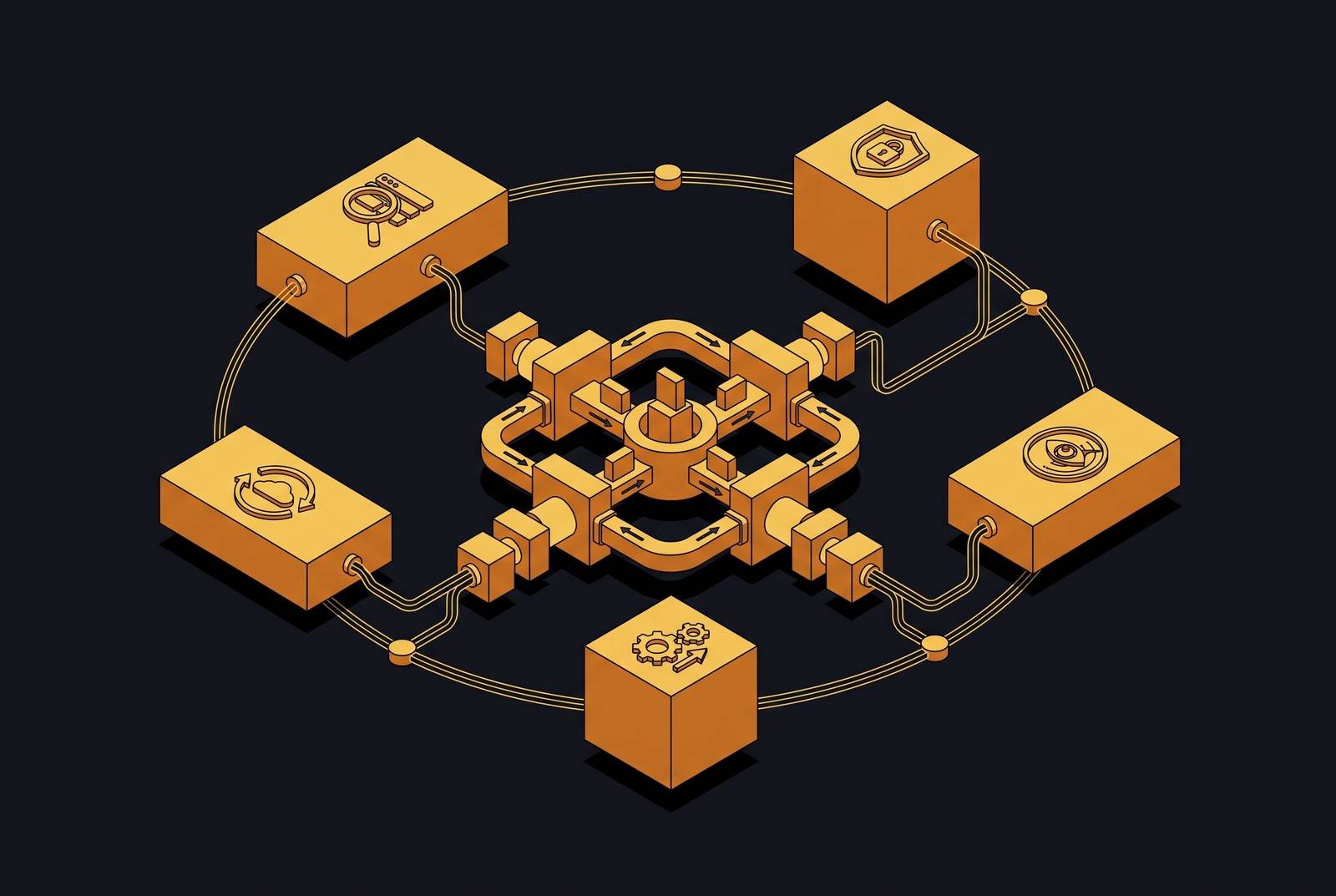
The real change from version 1.1 is Govern becoming its own function, and it doesn't sit off to the side. Conceptually, it encompasses the other five, with Identify, Protect, Detect, Respond, and Recover all answering to it. Earlier versions treated governance as something that showed up naturally once you did the other five well enough. CSF 2.0 flips that: governance comes first, and everything downstream just inherits whatever gets decided there. Get Govern wrong, and the other five functions are just very organized guesswork.
NIST SP 800-228 as the API-specific companion to CSF 2.0
CSF 2.0 is deliberately generic, because it has to work for a hospital, a power grid, and a fintech startup at the same time. That's why NIST published SP 800-228, "Guidelines for API Protection for Cloud-Native Systems," on June 27, 2025, with an update on March 13, 2026. Think of it as CSF 2.0's more opinionated cousin, the one who actually works in API security and won't stop bringing it up at dinner.
SP 800-228 does three things, in order. First, it identifies and analyzes risk factors across development and runtime. Second, it recommends basic and advanced controls at each lifecycle stage. Third, it lays out implementation options so teams can adopt controls incrementally, based on real risk, instead of trying to boil the ocean on day one.
Appendix E maps recommended controls to lifecycle stage, about as close to a punch list as a NIST document ever gets. The risk factors it names read like a greatest-hits album of API failure: no visibility into what APIs even exist, authorization that's missing or half-built, broken authentication, no limits on how much a single caller can consume, sensitive data leaking out through chatty responses, input validation loose enough to let garbage walk through the front door.
Govern: setting API security policy before writing a single control
Govern breaks into six categories: Organizational Context, Risk Management Strategy, Roles Responsibilities and Authorities, Policy, Oversight, and Cybersecurity Supply Chain Risk Management. In API terms, this is where the boring-sounding but load-bearing questions get answered. Who actually owns API security decisions? What's the org's appetite for risk when a partner integration asks for more access than you'd normally grant? How does API risk get reported up to the board, in language the board can actually use?
A few things live squarely here, and they don't move without a decision from someone with real authority. Risk needs a standard ranking system, so a critical exposure on a payments endpoint doesn't sit in the same queue as a stale documentation bug. Risk tolerance for third-party and partner APIs needs its own definition, since those integrations hand real control to code your team didn't write and can't patch directly. Supply chain risk follows the same logic: a vendor's API is a door into your house, and you don't hold the key to it. None of this works without an actual reporting channel, not an email thread that dies after two replies, for API risk to stay visible across teams and suppliers.
Start with Govern, not with technical controls. CSF 2.0 is at a much higher altitude than something like NIST 800-53, which makes Govern the natural opening for a security leader talking to a board. Boards do not want to hear about JWT expiration windows. They want resilience and dollars, and Govern is the only function built to speak in those terms.
Identify: building an API inventory that reflects reality
Identify covers Asset Management, Risk Assessment, and Improvement, and asset management is where most API security programs quietly fall apart. Only a small fraction of organizations report strong confidence in their own API inventory. Everyone else is guessing, to one degree or another, and the guessing gets worse as the org gets bigger.
Two ghosts haunt that inventory. Shadow APIs get deployed without security ever finding out they exist. Zombie APIs get marked deprecated on paper but keep answering requests anyway, like an ex who still has a key to your apartment. Together, these two categories make up a substantial share of a typical org's real API footprint. A third of the attack surface, running completely off the books.
The trend line makes this worse every year, not better. The share of organizations running more than 100 API endpoints grew sharply in recent years, a pace that outran most teams' ability to track what they'd even deployed. And A large majority of security professionals have reported an API-related incident in the past 12 months, with many of those tracing back to an endpoint their own team didn't know existed. You cannot protect what you cannot see, and most organizations right now can't see much past the APIs someone remembered to write down.
Protect: the authentication and access controls that close the largest attack categories
Identity failures appear in nearly 90% of Unit 42's investigations, and APIs make those failures more damaging because an API doesn't ask twice. It checks credentials once at the door, then trusts whoever walked through, for as long as that session lasts.
CSF 2.0 files this under Protect, subcategory PR.AA-01: managing identities and credentials for authorized users, services, and hardware, with least privilege under PR.AA-05 and multi-factor authentication under PR.AA-03 and PR.AA-04. Translated into an actual API stack, PR.AA-01 means ensuring that identities and credentials are properly managed and that access is enforced at the individual endpoint, not just at the API gateway's front gate.
Broken authentication caused 52% of API breach incidents analyzed in 2025. Not injection, not misconfiguration. Authentication, by a wide margin over everything else on the list. If a Protect budget only has room to fix one category this quarter, this is the one. Everything else is a distant second, and pretending otherwise is how budgets get spent on the wrong fire.
Detect: building the telemetry to catch what protection misses
APIs don't announce a break-in. There's no broken window, no alarm going off, just a low-traffic endpoint quietly handing data to someone who was never supposed to see it. Without instrumentation built specifically to catch that, an attack like this can run for months without tripping a single alert.
Detect starts with unglamorous plumbing: logging who calls each endpoint, how often, what response codes come back, how big the payloads are. That's the floor, not the ceiling. From there, behavioral baselining figures out what normal traffic actually looks like, so abnormal traffic finally has something to stand out against.
Runtime defenses (web application firewalls, bot detection, API gateways) act as the first filter, and they're genuinely good at catching known signatures. They're considerably worse at catching business logic abuse: BOLA (broken object level authorization), credential stuffing, data scraping. These attack types can be difficult to distinguish from legitimate traffic on a request-by-request basis. Signature-based tools miss them so often because of this. AI-powered runtime detection has emerged as a common answer to that gap, mainly because it spots patterns across a stream of requests instead of judging one request in isolation.
Then there's the wrinkle nobody budgeted for. Agentic AI traffic now hits the same endpoints human users do, and it has to clear the same bar. Machine-originated traffic can be high-volume and technically valid while still being semantically bizarre, and a baseline trained only on human behavior waves it straight through. Detect has to widen its lens to a category of caller that barely existed a few years back.
What does slow detection actually cost? In the Asia-Pacific region, 85% of enterprises experienced an API-related incident in the previous year, at an average cost exceeding US$580,000. That figure reflects the price of delayed detection, not merely the breach itself but the compounding cost of not noticing it sooner.
Respond and Recover: treating incidents as inputs to a better program
CSF 2.0 runs Respond and Recover in parallel, on purpose. Waiting for full containment before starting recovery just stretches the outage longer than it needs to be, so the two functions move together instead of in sequence.
Speed matters even more once a third party is in the picture. Incidents tied to third-party APIs can drag on significantly, mostly because the org doing the responding doesn't control the compromised system. A Respond plan that accounts for vendor dependencies up front, instead of assuming everything lives in-house, closes a real chunk of that delay.
Playbooks need to split by incident class, because an authentication breach, an authorization-flaw-driven data exposure, a DDoS through resource exhaustion, and a third-party compromise all call for different containment paths. Treating them the same turns a 20-minute problem into a 20-day one. Recover is what keeps the whole mess from being wasted time: every incident becomes a data point that feeds back into Govern and Identify, tightening the inventory, adjusting risk appetite, and making the next Protect decision sharper than the last one was.