Local API Development and Mocking Environments
Parallel development without waiting, plus error testing you can't get from live APIs.
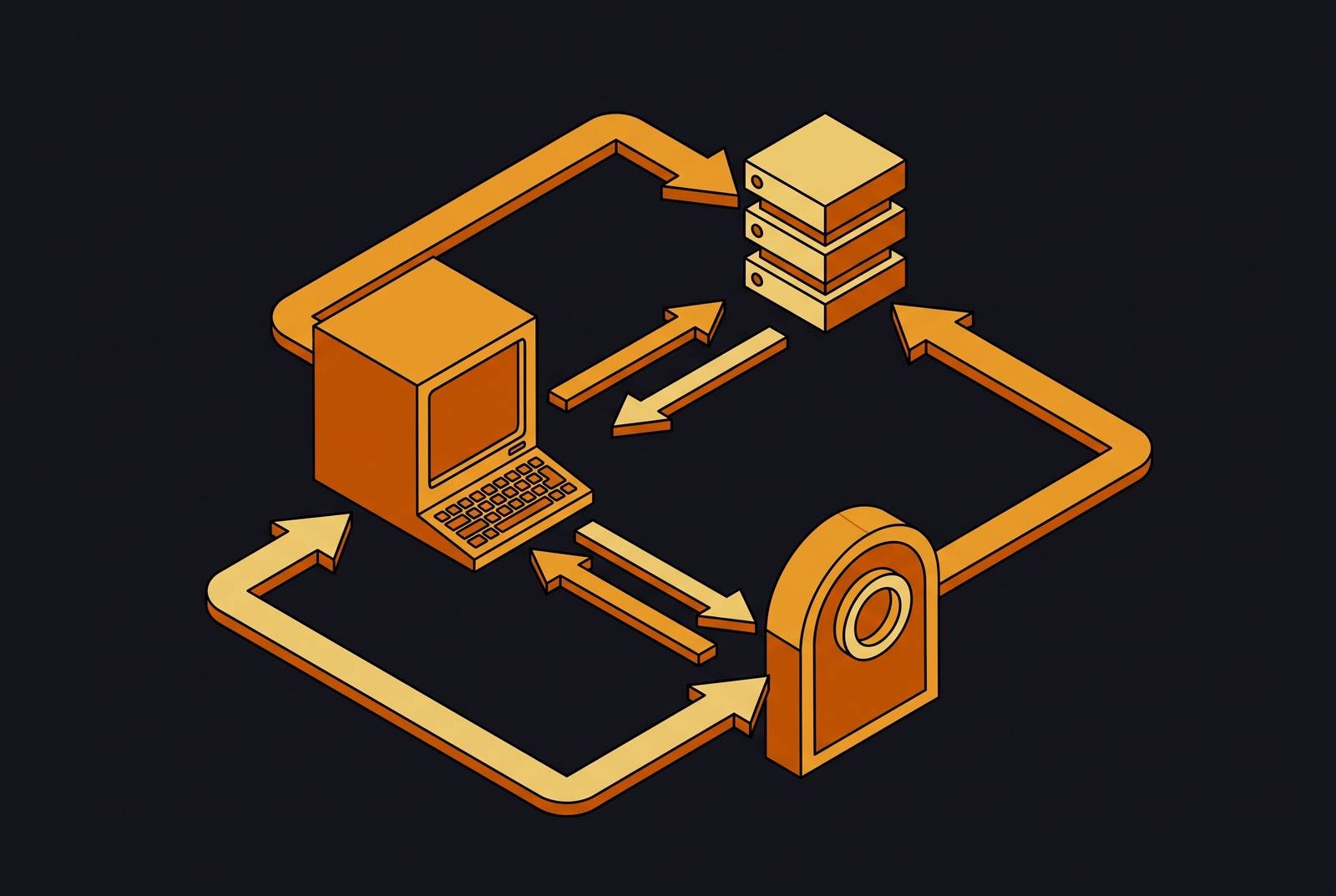
Local API mocking solves exactly one problem: teams stuck waiting on each other. Frontend developers need something to build against, backend developers need time to build it right, and mocking lets both things happen at once instead of in sequence. Most teams still set this up backwards, though. They front-load the parts that feel productive, writing fixtures, standing up endpoints, and skip the parts that actually pay off: error simulation, CI integration, a real exit plan. This piece covers what mocking does, when to use it, how to set it up right, and how to tell if it's working.
Start with the failure mode everyone's seen. Frontend and backend kick off a sprint together, full of good intentions and matching Jira tickets. Then frontend hits an endpoint that doesn't exist yet, and the whole thing stalls. Developers start pinging Slack for updates ("hey, is /users/profile live yet?"), building against hardcoded JSON someone typed up at 4pm on a Friday, or just waiting around. The bugs that should've shown up in week one show up during final integration instead, which is the worst possible time to find out your error states don't work.
There's a second layer people forget: external APIs. Stripe, Twilio, Google Maps, whatever the payment or identity provider happens to be. These come with rate limits, per-call costs, and sandbox environments that go down at inconvenient times. Testing against them constantly is slow, and in some cases, it's billed by the call, which turns a routine test suite into a line item someone in finance eventually asks about.
The payoff isn't theoretical. Spotify cut two weeks off feature delivery time by mocking UI development instead of waiting on live APIs. A fintech company saved $15,000 a year just by not hitting third-party APIs during testing. And the industry has caught on: Postman's 2024 State of the API Report found 74% of organizations now do API-first development, up from 66% the year before. Design and mock before you build has gone from clever trick to standard practice. Any team still treating mocking as optional is simply running a slower shop than it needs to, and there's no argument on the other side of that.
What API mocking actually does (and what it does not do)
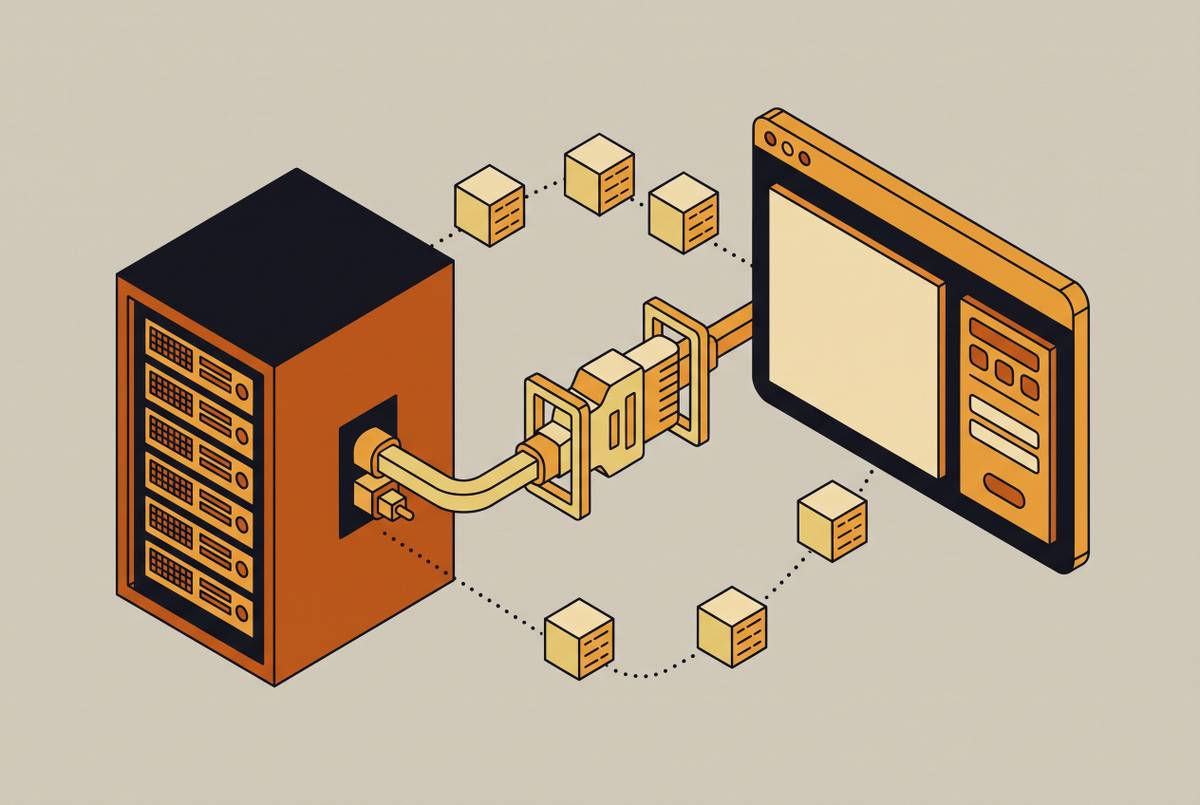
A mock API is a stand-in. It intercepts an outbound call, checks it against a set of rules, and returns a canned response, no live backend required. No magic, no AI (despite what some product pages imply), just a well-organized game of catch.
Every mocking tool, dressed up however the vendor likes, does three things. It intercepts the outgoing request before it reaches anything real. It matches that request against rules: URL, HTTP method, headers, body content. Then it delivers a response, static or dynamic, shaped like what the real API would return, complete with the right status code and headers.
That third step is where tools split into two camps, and most teams get the split wrong. Static mocking means someone wrote out fixed responses by hand for known endpoints. It's fast and predictable, fine for stuff that doesn't change, like a login-success message or a product catalog that isn't going anywhere. Dynamic mocking generates responses based on what's actually in the request. It takes more setup, but it's the only way to test conditional logic, like what happens on page 3 of a paginated list, or when a coupon code is invalid. Skip dynamic mocking entirely, and the team hasn't tested its own logic. It's admired a static screenshot of it and called that coverage.
Mocking has a ceiling, and pretending otherwise causes trouble down the line. Mocking is lightweight: it simulates one API's request-and-response surface, locally, for a specific test. Service virtualization operates at a bigger scale, capturing real traffic patterns, modeling stateful behavior across a whole system, and simulating performance characteristics like latency and throughput. The line has blurred somewhat, since modern mocking tools now support integration tests that used to require virtualization. Blurry isn't the same as identical, though, and a team that mocks its way through a load test is going to get surprised in production, usually at the worst possible hour.
Contract testing lives next door to both of these and does a different job entirely, focused on verifying that API producers and consumers stay in sync with each other. Useful, complementary, not a substitute.
Be clear about what mocking will never do. It won't replace load testing against a real system. It won't replace a security audit. It won't tell you how production performs under real-world stress. A mock server has never once caused a memory leak, which sounds like a compliment until you realize it's also never once caught one.
The four development scenarios where local mocking earns its place
Parallel development is the headline case, and it's not close. Frontend teams build and test against mock endpoints while backend engineers are still writing the actual service. Nobody's stuck waiting on anybody else's pull request, which is the entire point of the exercise.
Error handling comes second, and it's the most underused of the four, by a wide margin. Corrupted JSON, a 503 that shows up out of nowhere, a 429 rate-limit response, a latency spike that leaves the spinner just sitting there: these are hard to reproduce on demand against a real API, but trivial to force with a mock. Netflix runs actual chaos engineering experiments against production, deliberately injecting outages and latency to see how the system holds up. Local mocking is the smaller, cheaper version of that same instinct: break things on purpose, on your terms, before a user does it for you. A reasonable target is 80% or higher coverage of edge cases, weighted toward dynamic responses that simulate a range of failure conditions rather than one static "everything's fine" reply.
Third, the third-party API problem returns, this time from the testing angle. Payment gateways, mapping services, identity providers, anything with a rate limit or a per-call fee, get mocked so testing can happen without limit and without a bill showing up at month's end.
Fourth: service isolation in microservices setups. When one dependency in a chain of a dozen services goes down, it can block testing across the entire system, which is a strange kind of fragility for an architecture supposedly built around independence. Mocking each service individually means every piece gets tested on its own terms, regardless of what its neighbors are doing that day.
How to set up a local mocking environment: from first stub to realistic simulation
Don't mock everything on day one. That's the mistake almost every team makes, and it's the one that turns a mock environment into its own maintenance project. Map out which endpoints the feature or prototype actually needs, and mock those first. The rest can wait until something actually needs them.
For each endpoint, decide static or dynamic. Static works for anything predictable, a fixed catalog response, an auth-success message. It's quick to write and easy to check into version control. Dynamic is for anything that changes shape based on input, search results, a paginated list, and it takes either a templating feature in the tool or a bit of scripting to pull off.
Get the response templates exact. Status codes, headers, body structure, all of it should match the real API precisely. A mock that hands back a 200 where the real service would send a 201 is a bug that hides quietly until launch day. Use dynamic variables, timestamps, placeholder IPs, values derived from the request itself, to keep things feeling live instead of frozen.
Then simulate the bad days on purpose. Configure timeouts, 500-level errors, malformed payloads. Add artificial delay so the frontend doesn't get built assuming every response comes back in 12 milliseconds, because the real API will not always be that polite.
Put the mock definitions in Git. Treat them like code, because they are code: reviewed in pull requests, consistent across every laptop on the team. This matters even more for desktop tools without built-in cloud sync. Mockoon's desktop app, for instance, needs a Mockoon Cloud subscription to sync across a team. Without it, Git discipline is the only thing keeping everyone's environment aligned.
Plan the exit before writing the first mock, not after. If going to production means a find-and-replace across the codebase to swap mock URLs for real ones, that swap becomes its own source of bugs, defeating the entire purpose of mocking in the first place. Mocking at the gateway level avoids that outright. Design-first approaches, where an OpenAPI spec drives both the mock and the eventual production config, sidestep the problem the same way.
Embedding mocks in CI/CD pipelines so integration bugs surface before merge
A mock sitting on one developer's laptop only helps that developer. Put it in CI, and every pull request runs against the same controlled environment instead of whatever state someone's machine happened to be in that morning.
CLI-driven mock servers make this painless. Mockoon's CLI, MockServer's Docker image, WireMock's standalone JAR: all of them start and stop as pipeline steps, no GUI, no human clicking anything.
The sequence is straightforward. The mock server starts before tests run, integration and contract tests run against it, results and logs get saved as artifacts, and the mock server shuts down cleanly so nothing's left running between builds.
Some tools go further than checking whether the response came back right. MockServer supports expectation verification, meaning a test can confirm not just that the app handled a response correctly, but that it made the right calls, in the right order, the right number of times. That catches a missing call just as easily as a wrong one, and it matters more than it sounds like it should.
Record-and-replay is worth building in too. WireMock can capture real API traffic once and replay it later as a mock, handy for freezing the behavior of a flaky or expensive third-party service instead of hand-authoring every response it might send.
The real win is failure isolation. When a third-party API has a bad day, it used to take the whole CI pipeline down with it. With mocks in place, that instability gets absorbed, and the pipeline stays green for the code actually being tested. Teams using MockServer have reported a 25% bump in productivity specifically on latency-sensitive applications, which tracks: nobody has to sit and wait for a flaky server to time out three times before a test finishes.
Six tools that cover the realistic range of team needs in 2025
Skip the temptation to pick a tool by GitHub stars. Match the tool to the actual shape of the problem instead: can it handle stateful flows like a shopping cart or multi-step login, or only flat one-off responses? Does it start with a single CLI command or a half-day of config? Is it Git-backed, live-editable, or neither? Does it cover REST only, or GraphQL, WebSocket, and gRPC too? And is it open-source (more control, less hand-holding) or managed SaaS (support and uptime, at a price)?
Mockoon is open-source, runs as a desktop app, and works offline by default, no internet connection needed for local use. A paid Mockoon Cloud tier adds sync and deployment for teams that want it. It's light, free, and popular with solo developers and small teams. The CLI plugs straight into CI/CD. The tradeoff: no native cloud sync out of the box, so keeping a team's environments aligned depends entirely on Git discipline.
WireMock is a Java library and standalone server built for advanced matching, templating, and stateful simulation, the kind of thing microservices teams need when API interactions get genuinely complicated. It supports record-and-playback and runs well in Docker. WireMock Cloud adds a no-code setup and fault-scenario simulation, and according to wiremock.io typically costs 50 to 80% less than legacy service virtualization platforms. Good fit for enterprise teams working across a tangle of stateful services.
MockServer covers multiple protocols, supports programmable expectations, and verifies both requests and responses. It's the pick for QA engineers building automated pipelines who need to know not just what happened, but in what order it happened.
Postman offers a visual editor, cloud-hosted mock servers, and built-in testing and documentation tools, all in one place. One-click mock creation, CLI support for CI/CD. Fits teams that want design, mocking, testing, and docs under a single roof instead of stitched together from five separate tools.
Beeceptor is cloud-based and needs no install: spin up a public or private mock endpoint instantly, complete with stateful mocking, a schemaless JSON store for CRUD mocking, local tunneling to expose localhost over HTTPS, and record-and-replay for live traffic. Great for demos, prototypes, and any situation where sharing a mock URL outside the company firewall is the actual goal.
Swagger / OpenAPI-driven mocking ties directly into an OpenAPI spec, so the same document defining the API also generates the mock and, later, the production docs. Moldstud's 2025 comparative review found over 60% of companies using Swagger reported better team communication as a result. Fits teams that treat the spec itself as the source of truth, not an afterthought written after the code.
Buying WireMock's stateful power for a two-person team building a demo is like renting a cement mixer to bake a cake: technically capable, wildly wrong-sized. Beeceptor and Postman solve a sharing problem. WireMock and MockServer solve a complexity problem. Those are different shopping lists, and treating them as interchangeable is how teams end up paying for capability nobody on staff needs.
Common failure modes that undermine otherwise well-designed mock environments
Mock drift is the big one, and it's the one that costs the most because nobody notices right away. The backend evolves, the mock doesn't, and six weeks later the mock is confidently lying to everyone who uses it. Nobody catches this until something breaks in a way that makes no sense given what the tests said.
Overly optimistic mocks run a close second, and this is the failure mode that actually undoes everything mocking was supposed to buy a team. If every mock returns a clean 200 with perfect data, developers build for a world that doesn't exist, and the real API's rough edges get discovered in production instead of in code review. There's no version of this that ends well.
Skipping latency simulation trains the whole app to assume responses arrive instantly. Loading states, timeout handling, anything performance-sensitive goes completely untested, because the mock never gave the app a reason to think slowly about anything.
Keeping mock files off Git means the team is technically running different test environments without realizing it. A pipeline that passes on one machine can fail everywhere else, and the reason takes forever to track down because "it works on my machine" is somehow still a live phrase in 2025.
Testing only the happy path wastes the best feature mocking has to offer. Simulating a 500 error or a malformed payload takes minutes. Skipping that step just means the 500 error gets discovered by a customer instead of a test suite, which is a worse place to find bugs by every measure that matters.
Treating the move to production as an afterthought brings back the exact risk mocking was supposed to remove. If the mock is wired to a hardcoded localhost URL that needs manual swapping before launch, that swap is a new bug waiting to happen, right at the worst possible moment to find one.
How to measure whether a local mocking setup is actually accelerating delivery
The clearest signal is time: how long does it take frontend work to start after an API is designed, not after it's built? If that gap has shrunk from weeks to days, the setup is doing its job. Spotify's two-week reduction in feature delivery time is the kind of number that should show up, in some form, on any team doing this right.
Cost is the second signal, and it's the easiest to track without any special tooling. Add up what third-party API calls used to cost during testing, then compare it to what they cost now that most of that traffic hits a mock instead. The fintech example, $15,000 saved annually, is a modest number for a large company and a significant one for a small team. Either way, it's a number finance departments like seeing on a slide.
Bug timing matters just as much. Track where integration bugs get caught (local dev, CI, or staging) and watch that shift left over time. If bugs that used to show up during final wiring now show up in a pull request review, mocking is catching what it's supposed to catch.
CI stability deserves its own line item. Count how often a pipeline fails because of a flaky external dependency versus an actual bug in the code. As mocks absorb more of that instability, that ratio should tilt hard toward "actual bug," which is really the only kind of failure a pipeline should ever be reporting.
None of this needs a fancy dashboard. A shared doc with four rows, updated once a quarter, does the job. The setup is working if the numbers move in the right direction, and nobody's pinging Slack anymore asking if an endpoint is ready yet.